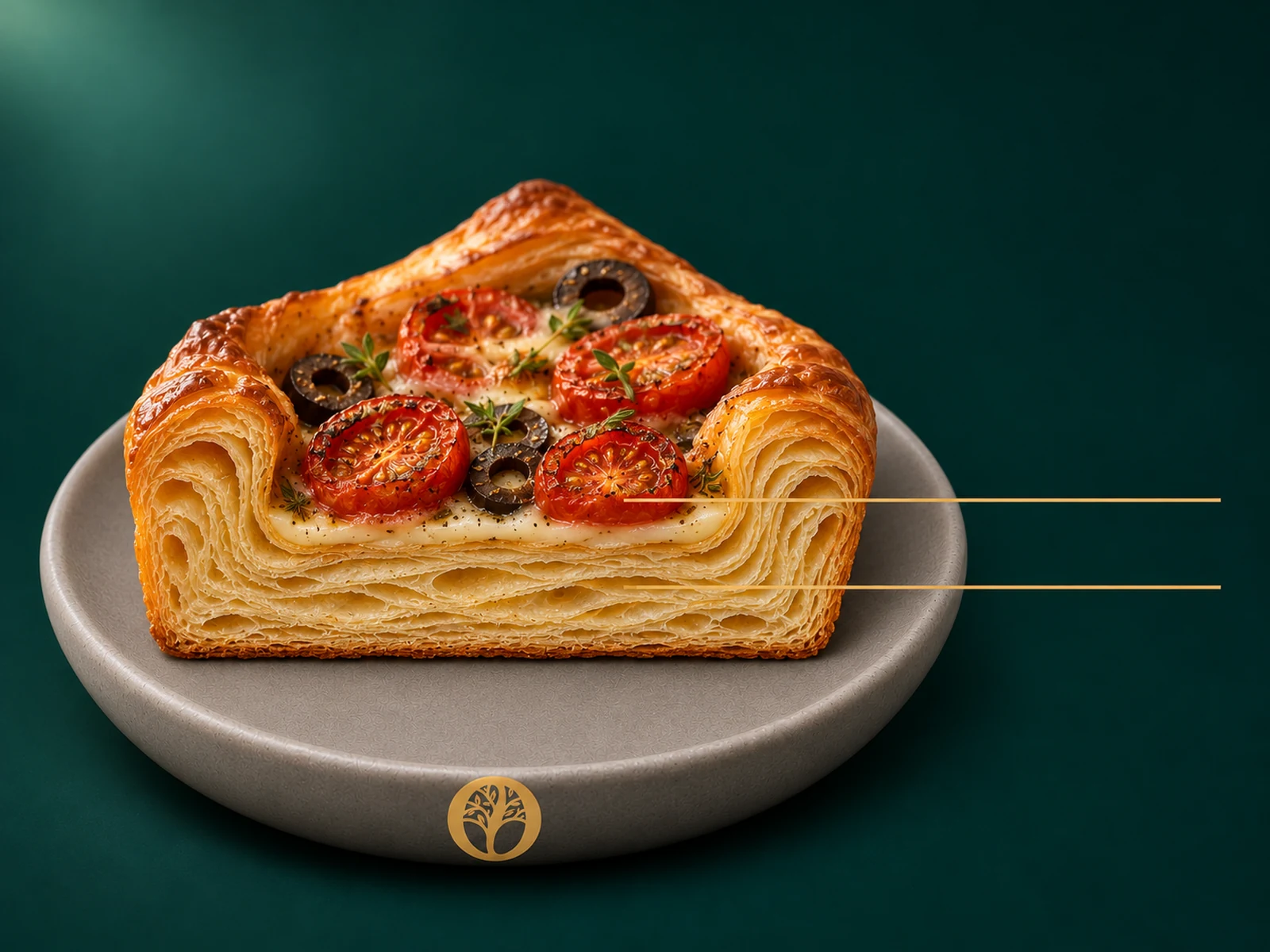
Layers lifted by steam
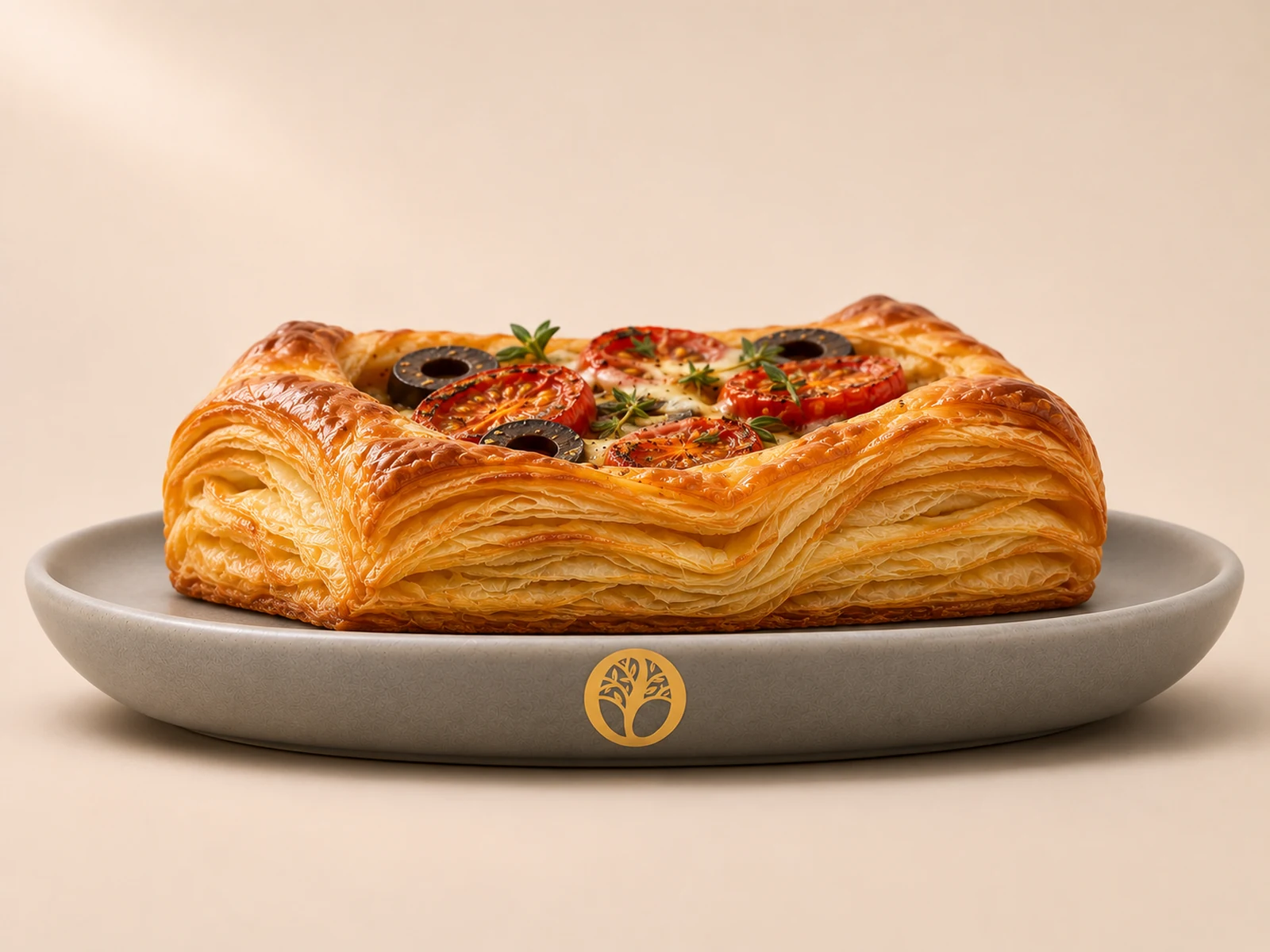
Folding and rolling place thin sheets of butter between layers of dough. In the oven, water becomes steam and helps separate the layers as the dough sets. Yeast fermentation also contributes gas in Danish dough. [1]



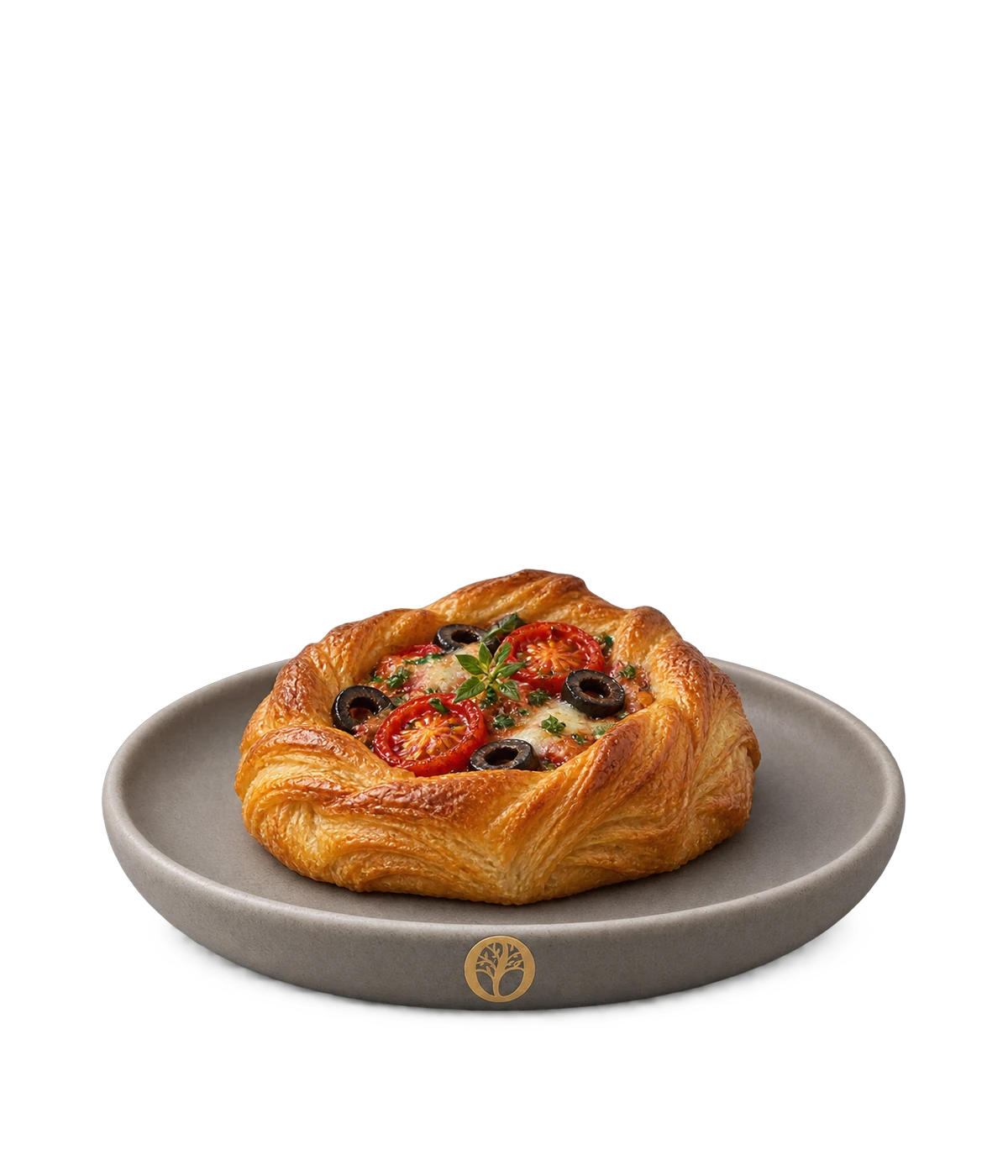
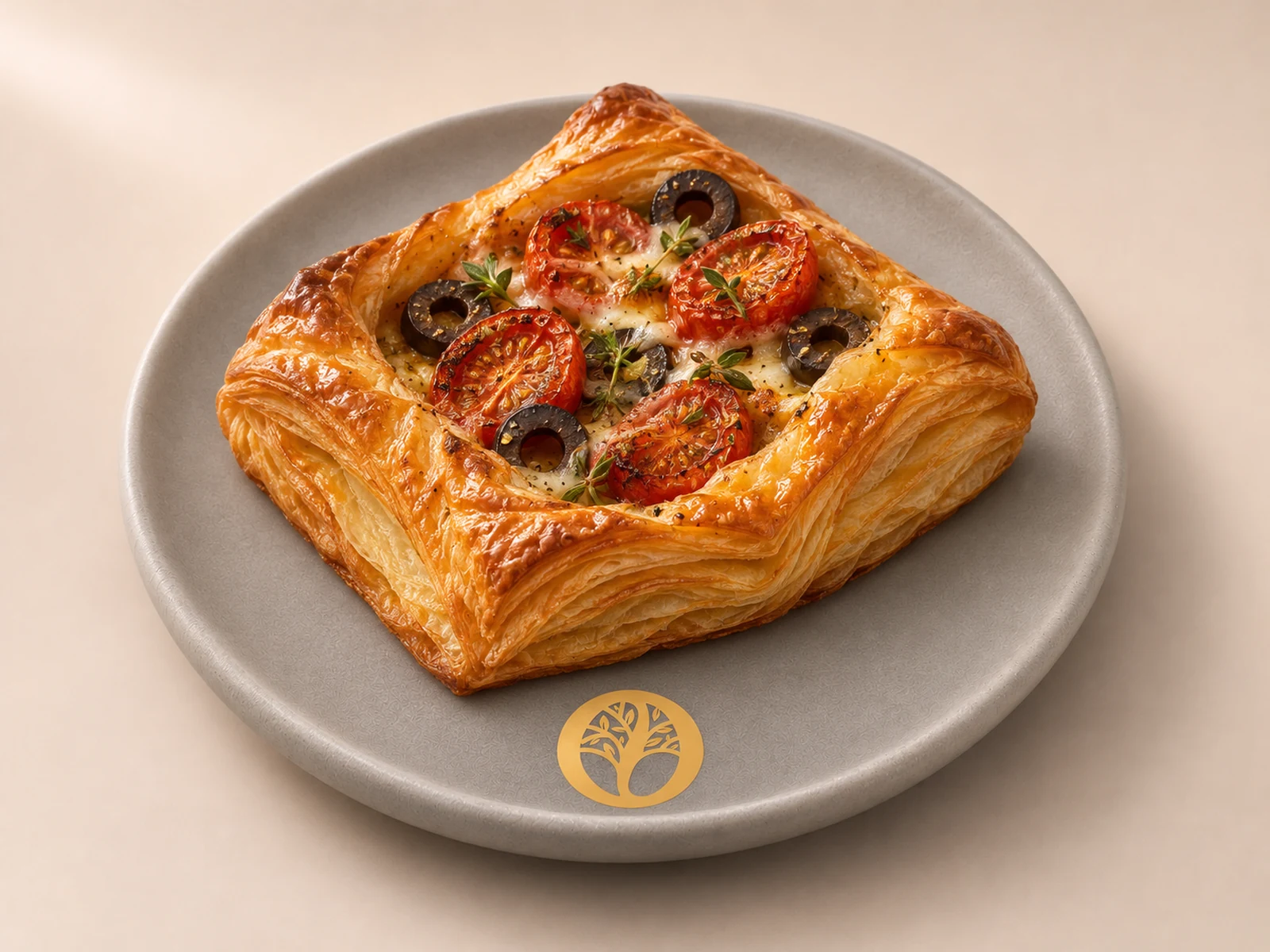
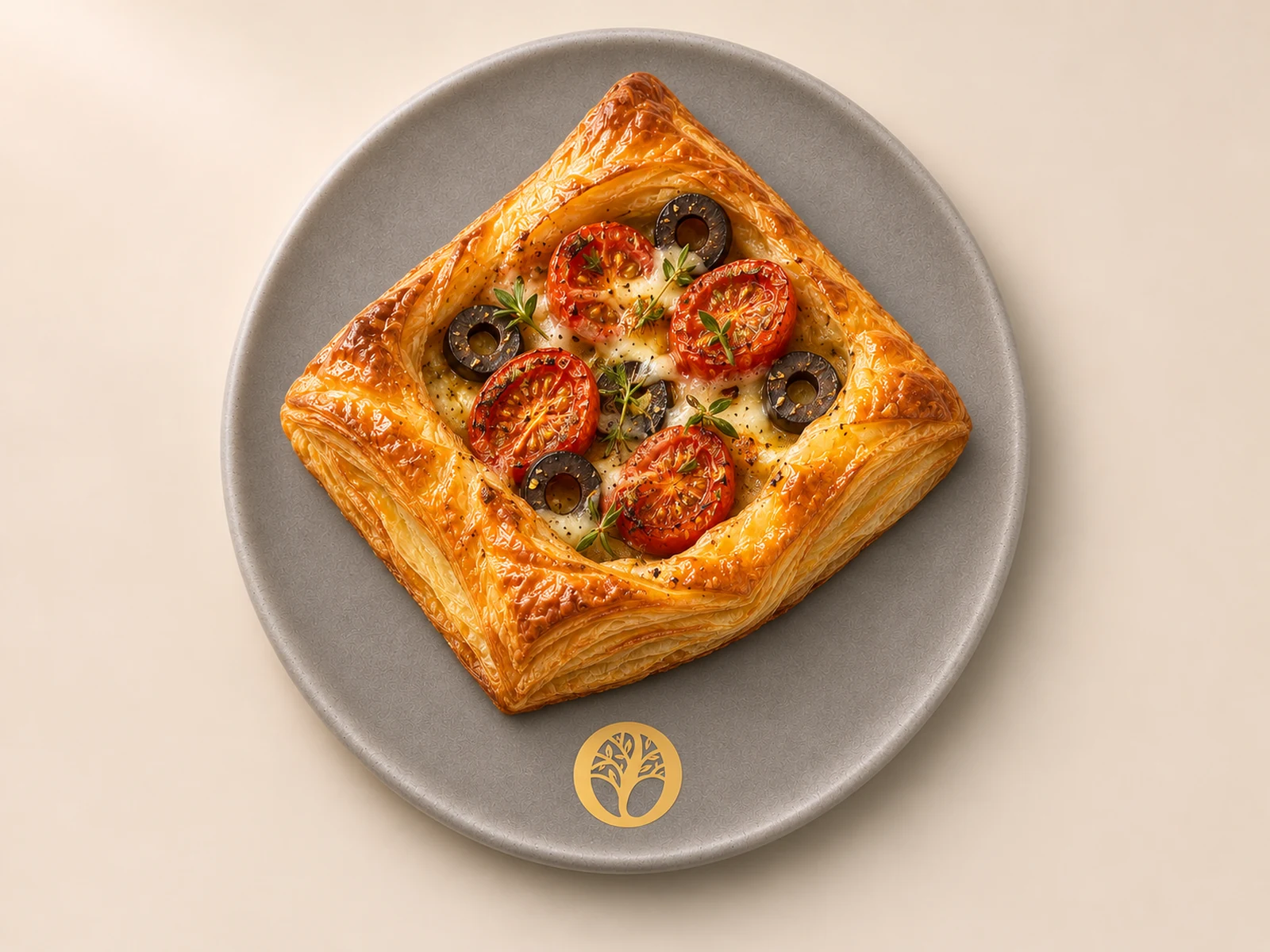
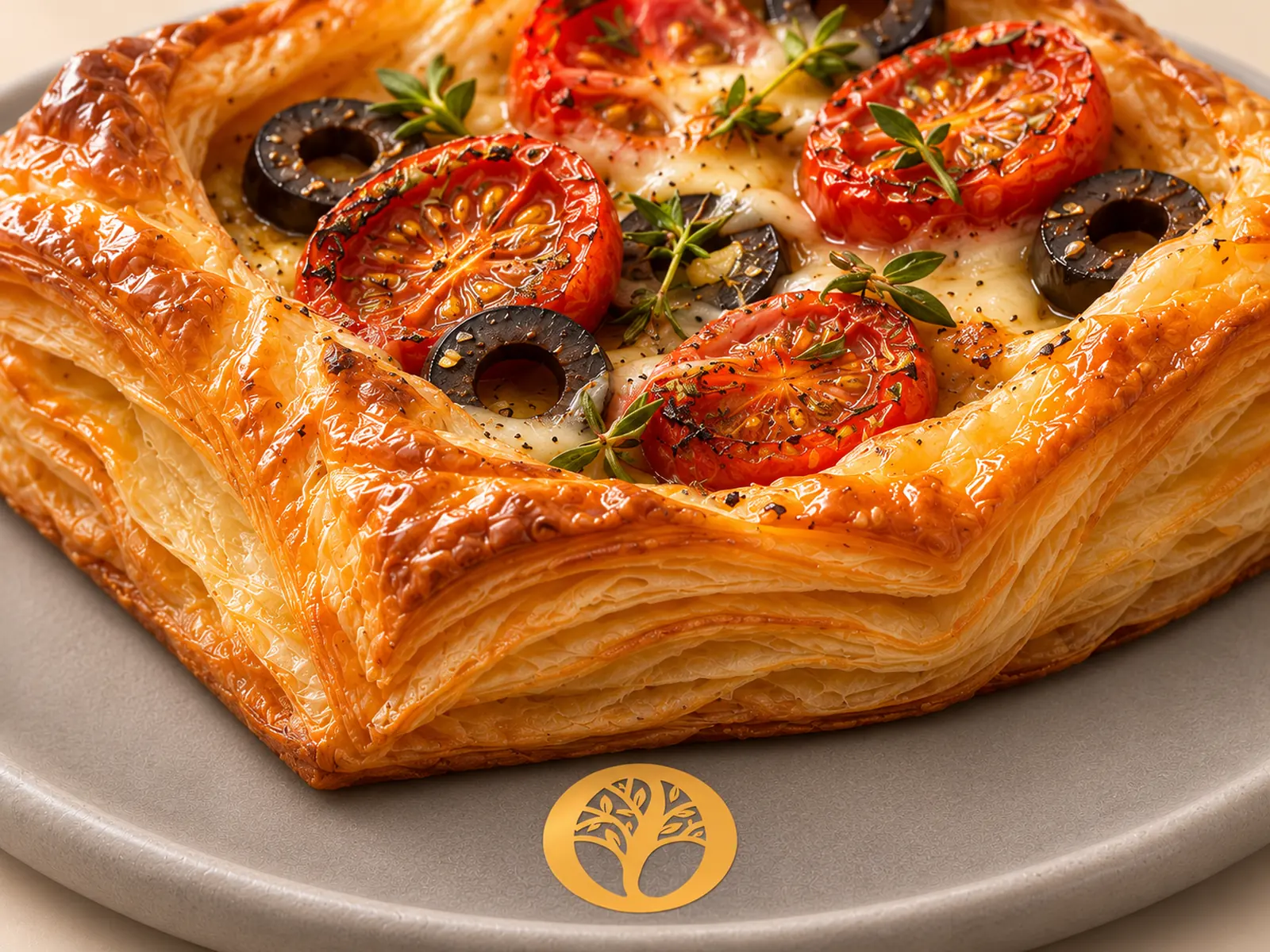
Golden layers, roasted cherry tomatoes, black olives and a little cheese.
A crisp, golden border frames roasted cherry tomatoes, black olives and a little cheese. Thin layers of butter and dough create a flaky edge around the softer centre. Tomato brings gentle acidity; olives add a briny finish. Nutrient amounts depend on the recipe, filling and portion size.
| Component | Per typical serving | Notes |
|---|---|---|
| Weight | Varies by piece | Includes the pastry, filling and topping. |
| Wheat flour | Varies with recipe and portion size | Provides starch and the proteins that form gluten. |
| Total fat | Varies with recipe and portion size | Butter, cheese and olives contribute fat; their amounts depend on the recipe. |
| Sugars | Varies with recipe and portion size | Includes added sugar in the dough and naturally occurring sugars in the topping. |
| Protein | Varies with recipe and portion size | Wheat, cheese and egg in the dough or glaze contribute protein. |
| Sodium | Varies with recipe and portion size | Salt in the dough, olive brine and cheese all affect the total. |
| Energy | Varies with recipe and portion size | Energy depends on the recipe, filling and portion size. |
| Allergens | Typically wheat/gluten, milk and egg | Ask staff to confirm ingredients and possible cross-contact with tree nuts, peanuts and sesame. |
Each bar uses its own labelled scale; values are not comparable across units.
Folding and rolling place thin sheets of butter between layers of dough. In the oven, water becomes steam and helps separate the layers as the dough sets. Yeast fermentation also contributes gas in Danish dough. [1]
Water and mixing bring wheat proteins together into a flexible gluten network. Glutenins contribute elasticity; gliadins help the dough stretch. This structure supports the layers during rolling and baking. [2] [1]
At the drying surface, reducing sugars react with amino compounds through the Maillard reaction. This develops brown colour and toasted aromas. The moist centre stays softer than the exposed edge. [3]
Butter must be pliable enough to roll into thin sheets. If too cold, it can crack; if too warm, it can smear into the dough. Temperature helps determine how clearly the layers separate. [1]
Tomatoes release water as they bake. Some evaporates; some can soften the pastry beneath the filling. A modest, well-drained topping helps the centre and crisp border keep their distinct textures. [1]
Butter, flour and cheese contribute energy. The recipe and portion size affect the total. [4]
Savoury dough can contain added sugar. Butter and cheese contribute saturated fat. [4]
Brined olives, cheese and salted dough contribute sodium. Their amounts and salt content vary between recipes. [4]
Typical recipes contain wheat/gluten, milk and egg. Ask staff to confirm the ingredients and possible cross-contact with tree nuts, peanuts or sesame before ordering if you have an allergy. [5]
Consider the portion alongside the rest of your meal. A small tomato topping provides a limited amount of vegetables. [4]
For general information only; not medical advice. Values vary with recipe and serving size.
Pair with an iced Americano. Its roasted notes echo the golden crust, while its bitterness contrasts with the buttery layers and briny olives.
Serve warm, with the centre comfortable to eat.
Present on a small plate, with the coffee in a separate glass.
Alternate bites and sips to balance the briny olives, buttery pastry and coffee bitterness.
★★★★★
Quality brew, great service and lovely pastries! What more to ask for on a rainy day 😌
★★★★★
Wow what a gem. Had ham and cheese croissant that was absolutely delicious! Almond croissant was very fresh and tasty! They do have professional coffee machine but i had tea. Ambiance and service are great too! And the prices are very fair to say the least. I’m surprised there isn’t a line out the door here! Absolutely recommend this place!
★★★★★
Best croissant outside of Europe
★★★★★
A lovely, quiet café with a cozy and relaxing atmosphere. The food is delicious, especially the cinnamon roll and sandwich. The coffee is very smooth.
★★★★★
Beautiful café run by an incredibly friendly family! Had an oat milk latte, and it was excellent. Highly recommend!
★★★★★
Thank you for the wonderful café you’ve created; your coffee and pastries are exceptional.
★★★★★
Best cafe in the area Very lovely place and good quality
★★★★★
Super good perfect balance of matcha milk coffee and sweetness please don’t ever change hahah
★★★★★
A bit expensive but good!