Layers and lift
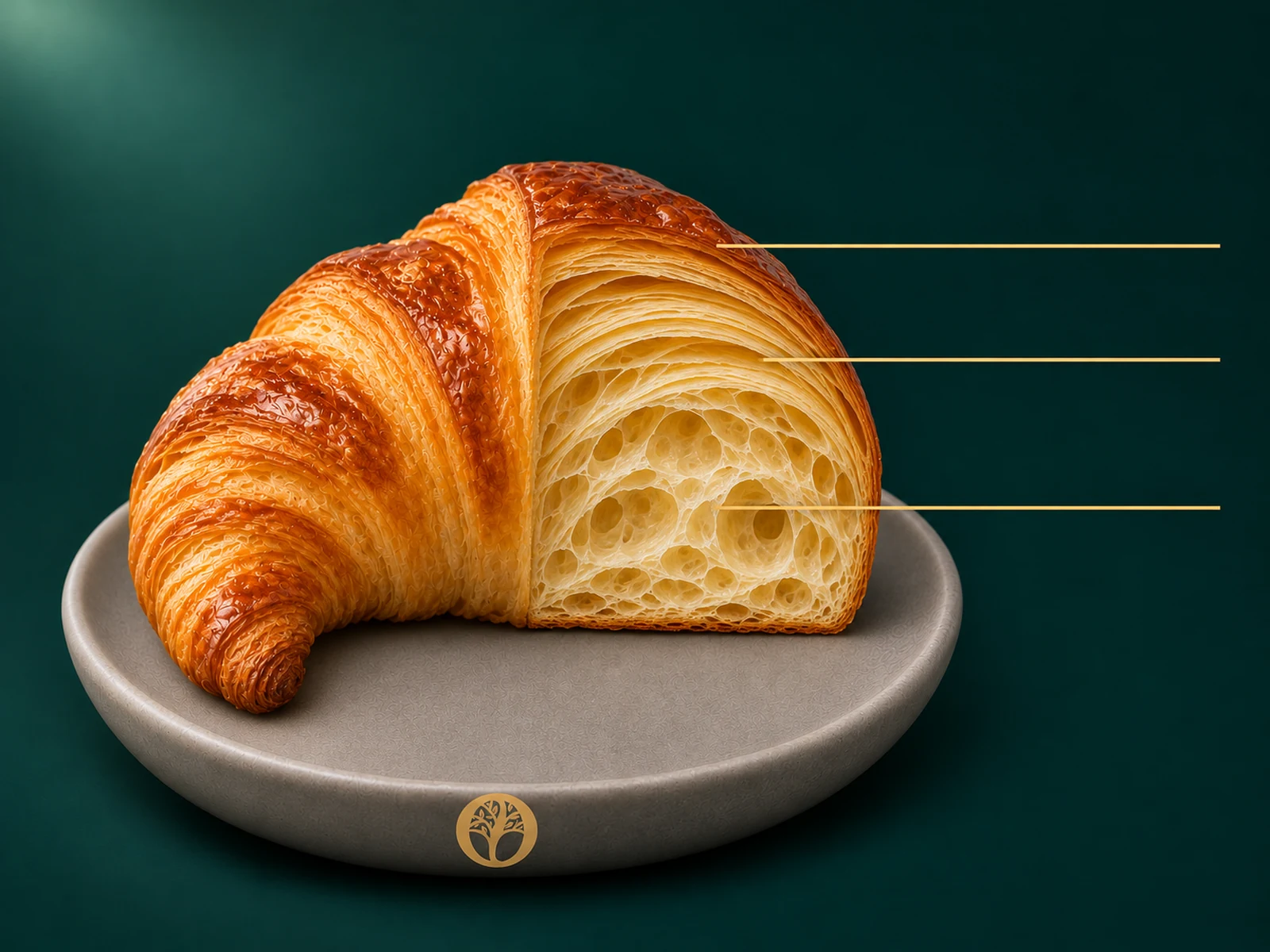
Folding places butter between thin sheets of dough. Yeast produces carbon dioxide during proofing. In the oven, expanding gases and steam help separate the layers. [2]



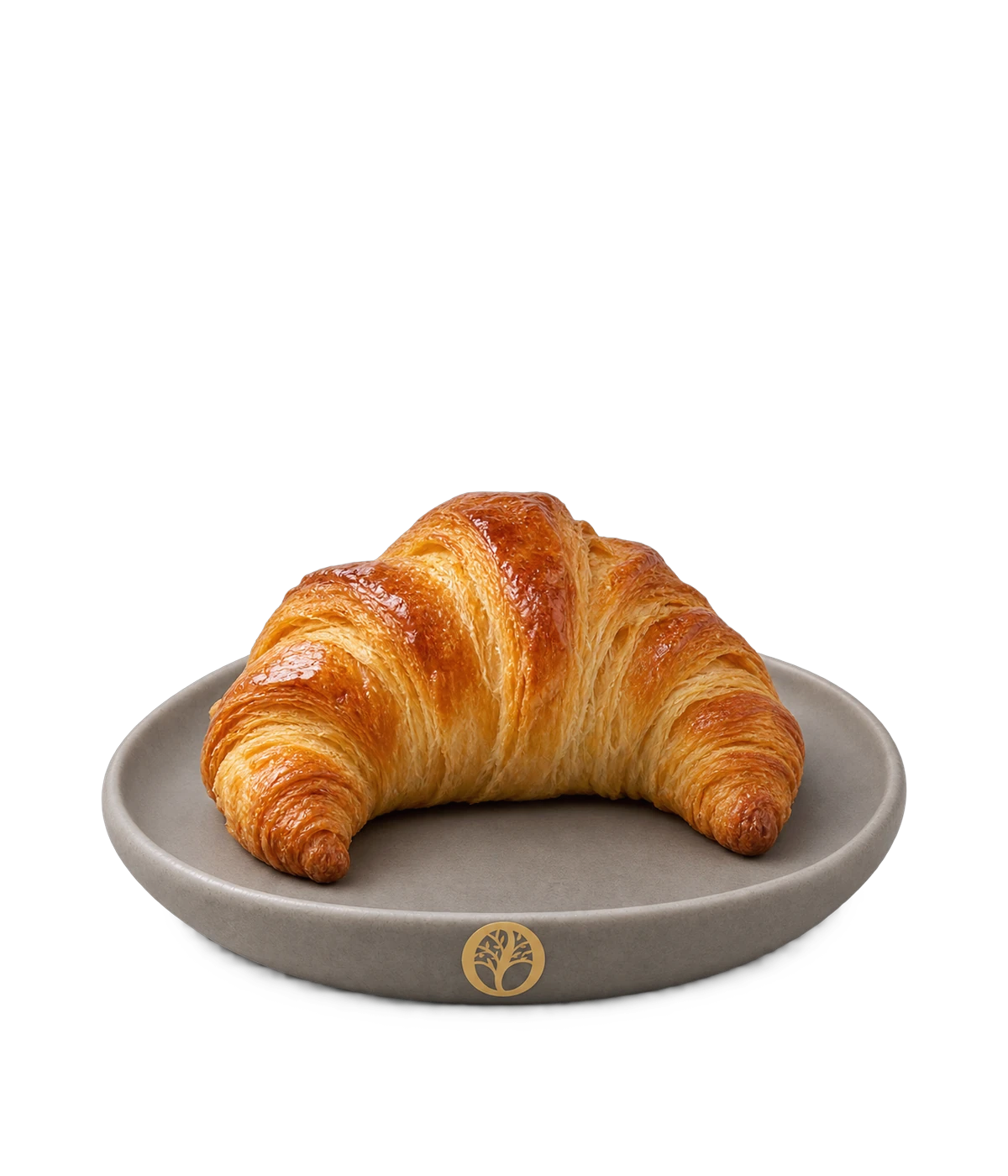
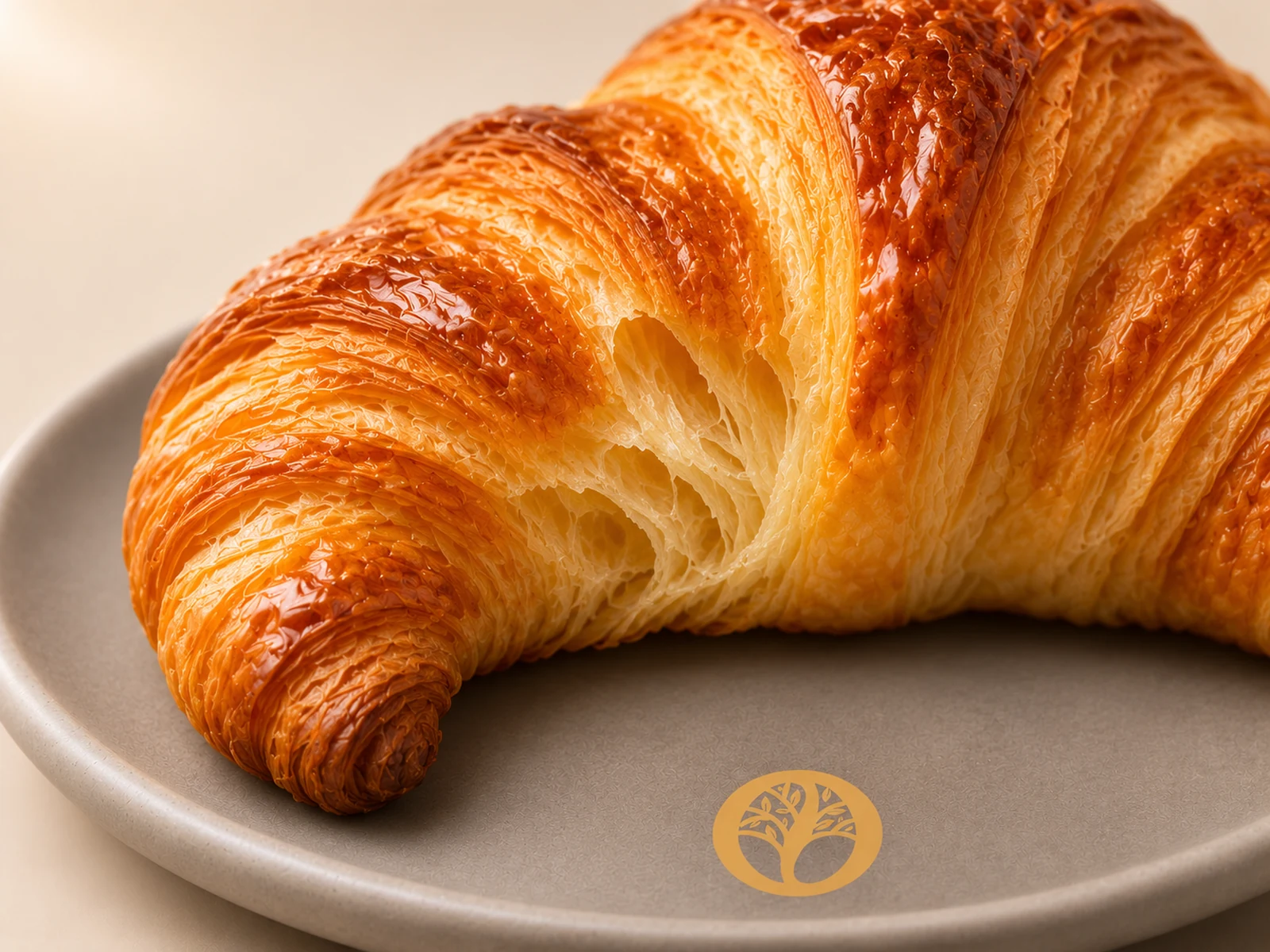
A golden crescent of butter, dough, and delicate layers.
A croissant brings a crisp, golden shell into balance with a light, open crumb. Rolling and folding build thin layers of dough and butter. Fermentation and oven heat give them lift. The nutrition estimates below use generic butter-croissant data; Amberdo’s recipe and portion size may differ.
| Component | Per typical serving | Notes |
|---|---|---|
| Weight | 60–90 g per baked piece | Serving size varies. |
| Wheat flour | Varies with the recipe | Flour forms the dough; its ingredient weight cannot be read from the finished pastry. |
| Total fat | Approximately 13–19 g | Mainly from butter. Fat weight is not butter weight. |
| Total sugars | Approximately 6–10 g | Includes all sugars, not just added sugar. |
| Protein | Approximately 5–8 g | From wheat, milk, and egg; amounts vary with the recipe. |
| Sodium | Approximately 450–670 mg | Salt and portion size affect the total. |
| Energy | Approximately 240–370 kcal | Nutrient ranges are scaled from Health Canada’s butter croissant entry for a 60–90 g portion. |
| Allergens | Wheat/gluten, milk, egg | Ask staff about ingredients and shared equipment, including contact with nuts, peanuts, and sesame. |
Each bar uses its own labelled scale; values are not comparable across units.
Folding places butter between thin sheets of dough. Yeast produces carbon dioxide during proofing. In the oven, expanding gases and steam help separate the layers. [2]
Water and mixing bring wheat proteins into an elastic gluten network. It helps the dough stretch around gas cells and hold its shape. [3]
As the surface dries and heats, sugars react with amino compounds through Maillard reactions. These reactions develop brown colour and toasted aromas. [4]
Butter must bend with the dough during rolling. Too cold, it cracks. Too warm, it smears into the dough and blurs the layers. [2]
After baking, moisture moves from the crumb towards the dry crust, softening its flakes. Starch reorganisation also contributes to crumb firming during storage. [5]
A 60–90 g croissant provides approximately 240–370 kcal. A larger portion contributes more energy. [1]
Butter contributes fat, including saturated fat. Total sugars include both naturally occurring and added sugars. [1]
A 60–90 g portion contains approximately 450–670 mg sodium. The amount depends on the recipe and size. [1]
This style typically contains wheat/gluten, milk, and egg. Ask staff about tree nuts, peanuts, sesame, and shared preparation before ordering if you have an allergy. [6]
Choose a portion to suit your appetite and the rest of your meal. Nutrient amounts vary with the recipe and size. [1]
For general information only; not medical advice. Values vary with recipe and serving size.
Pair with an Amberdo cappuccino. Toasted coffee notes complement the golden crust and buttery crumb.
Enjoy slightly warm. Brief oven reheating helps crisp the outer layers; prolonged heating dries the crumb.
Serve on a small plate. Let a plain croissant cool before wrapping; freeze well wrapped for longer storage.
One croissant alongside a cappuccino makes a simple pairing. Choose the portion and drink size to suit your appetite.
★★★★★
Quality brew, great service and lovely pastries! What more to ask for on a rainy day 😌
★★★★★
Wow what a gem. Had ham and cheese croissant that was absolutely delicious! Almond croissant was very fresh and tasty! They do have professional coffee machine but i had tea. Ambiance and service are great too! And the prices are very fair to say the least. I’m surprised there isn’t a line out the door here! Absolutely recommend this place!
★★★★★
Best croissant outside of Europe
★★★★★
A lovely, quiet café with a cozy and relaxing atmosphere. The food is delicious, especially the cinnamon roll and sandwich. The coffee is very smooth.
★★★★★
Beautiful café run by an incredibly friendly family! Had an oat milk latte, and it was excellent. Highly recommend!
★★★★★
Thank you for the wonderful café you’ve created; your coffee and pastries are exceptional.
★★★★★
Best cafe in the area Very lovely place and good quality
★★★★★
Super good perfect balance of matcha milk coffee and sweetness please don’t ever change hahah
★★★★★
A bit expensive but good!