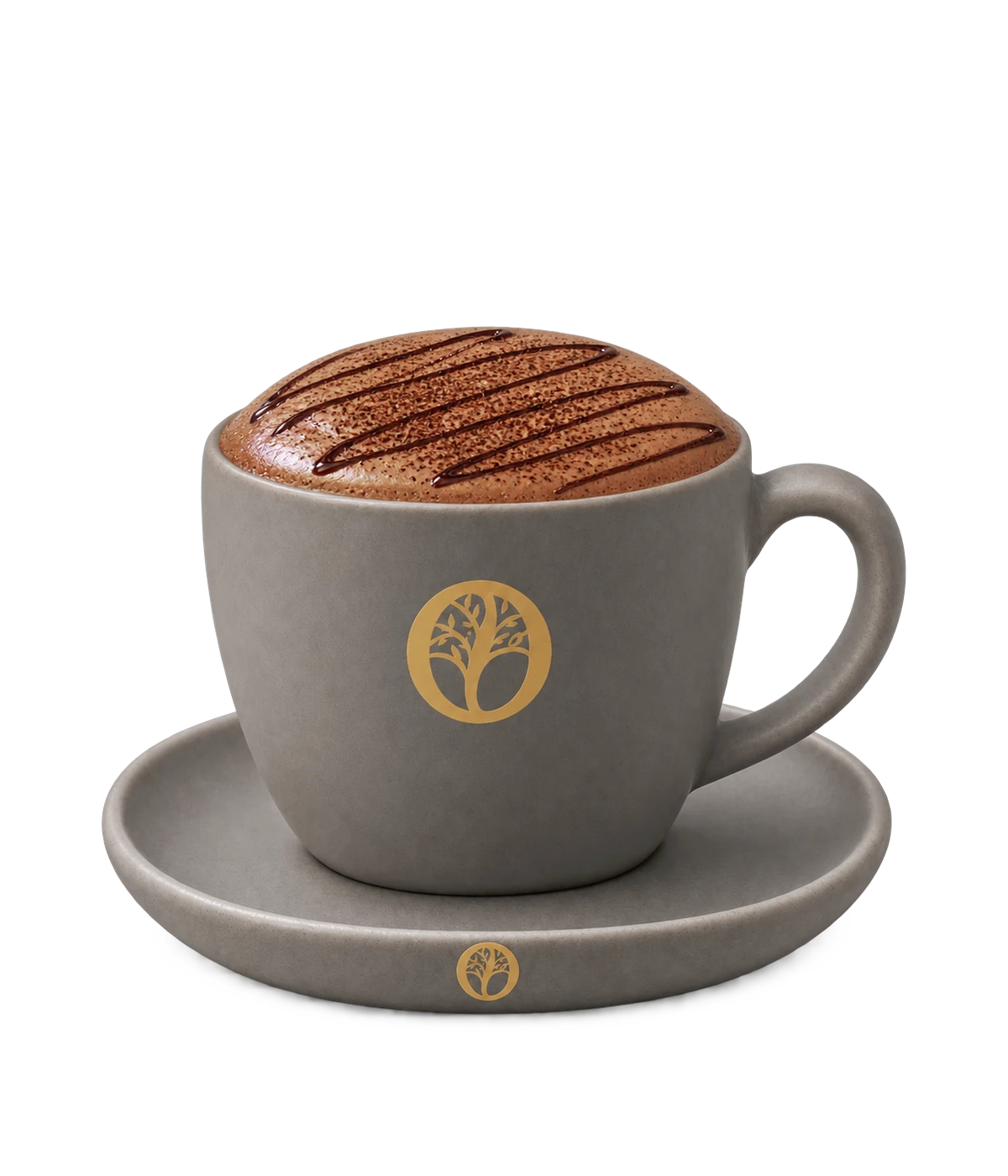
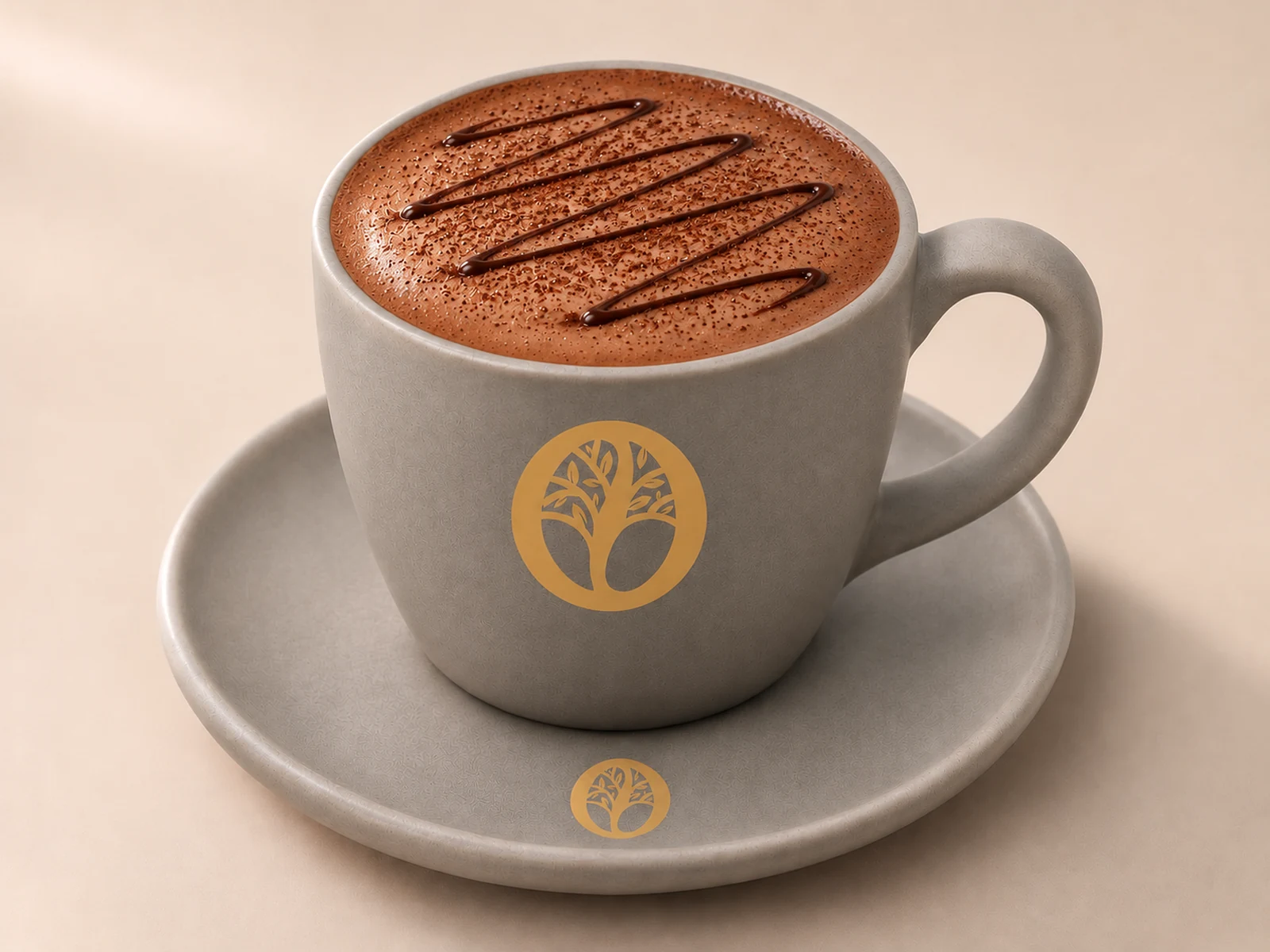
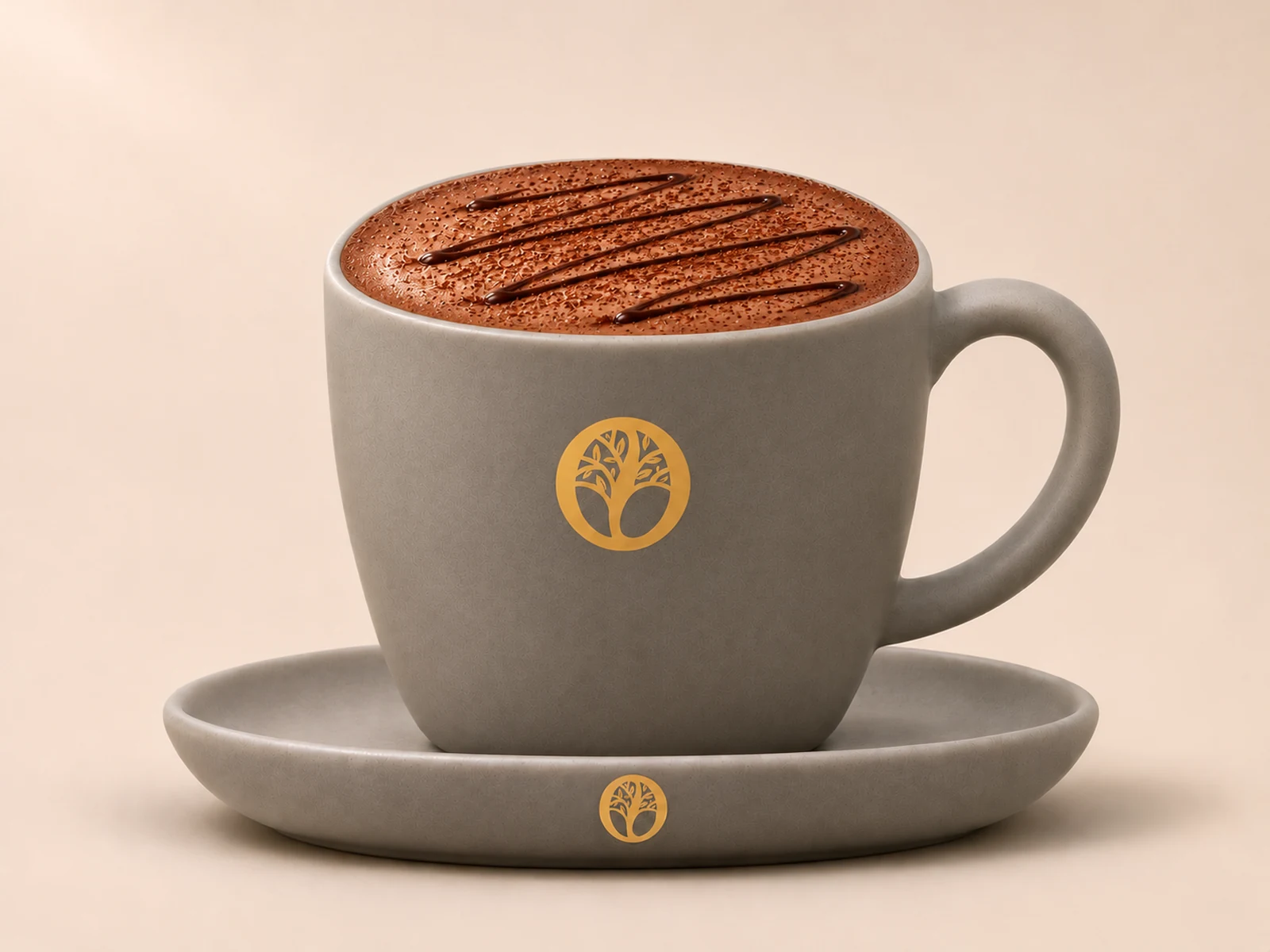
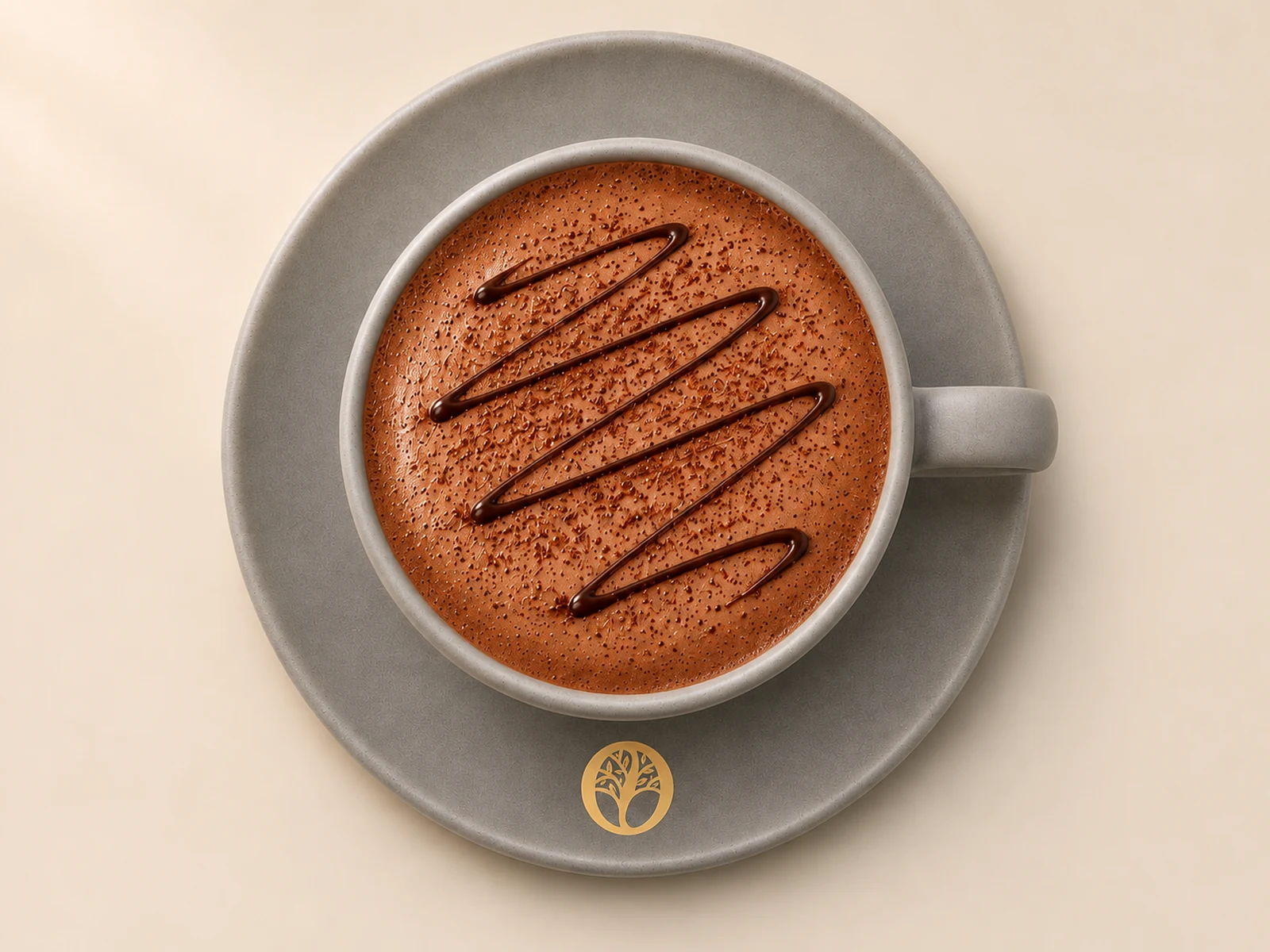
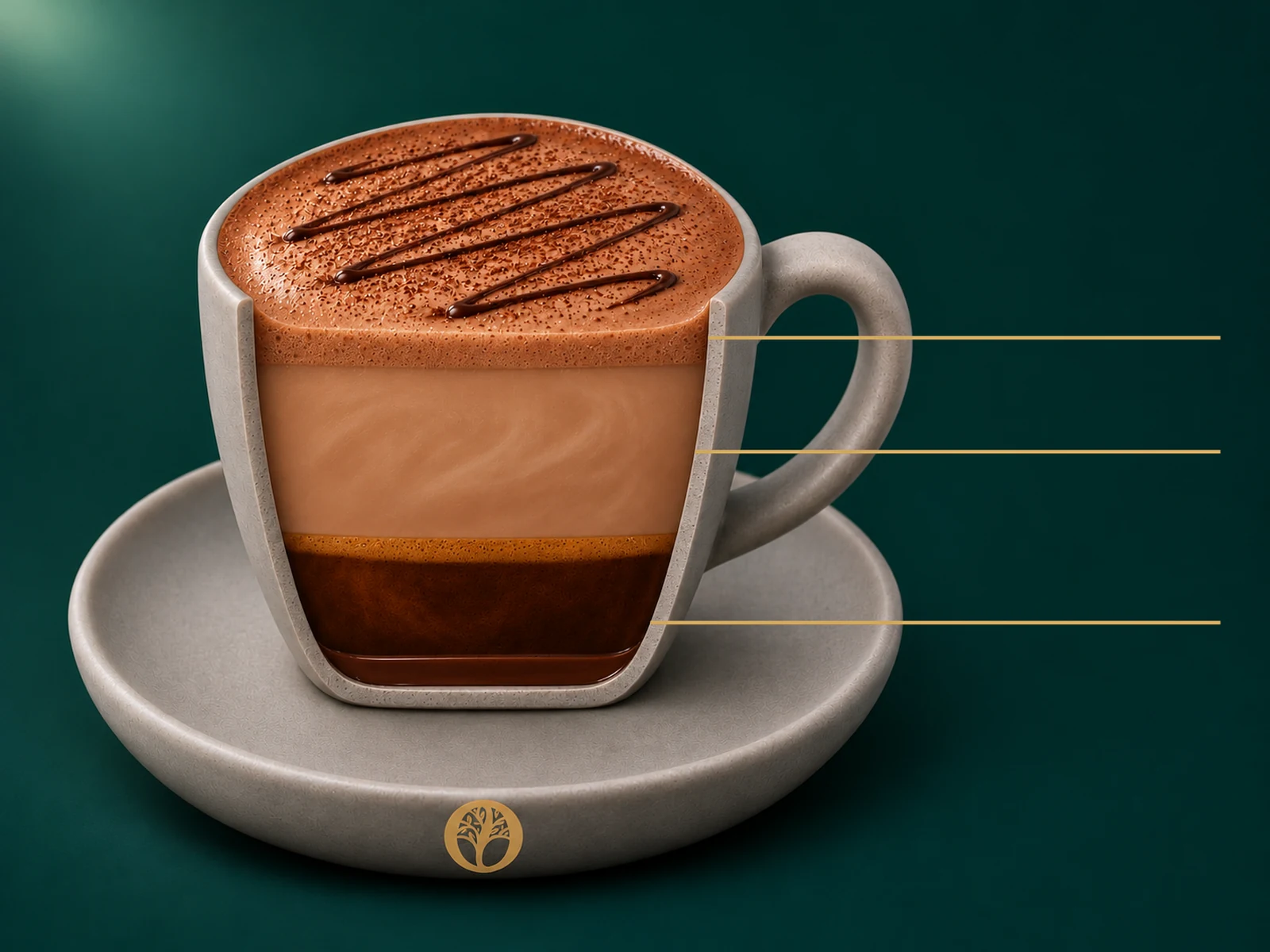
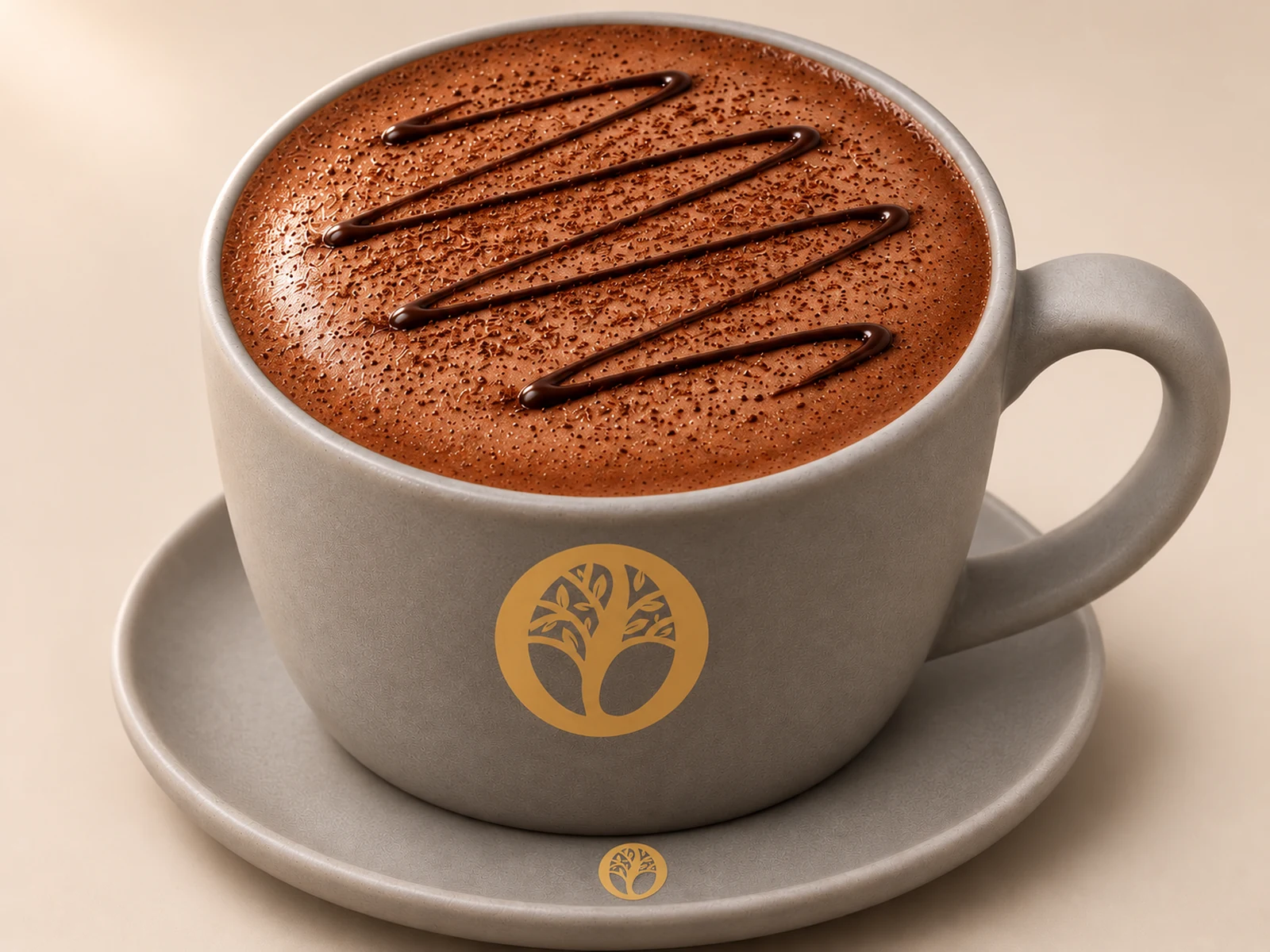
Espresso, dark chocolate, and the fine structure of cocoa-brown microfoam.
Mocha brings espresso and dark chocolate into steamed milk, with glossy cocoa-brown microfoam, a fine chocolate drizzle, and a light cocoa dusting. Roasted coffee aromas meet cocoa’s bitterness, while milk softens the sensory balance and adds body. Cocoa contributes flavanols and theobromine as well as a little caffeine of its own. This profile uses a nominal 12 oz / 355 mL café serving with dairy milk, solid dark chocolate, and no whipped cream or extra syrup. All quantities are illustrative, recipe-dependent estimates, not laboratory results or Amberdo nutrition declarations. Chocolate percentage, milk choice, espresso dose, and topping quantity change the finished drink.
Composition
Component
Per typical serving
Notes
Espresso
30–60 mL, approximately 1–2 shots
Reference recipe for a nominal 12 oz / 355 mL cup, including foam. Shot volume, coffee dose, and extraction vary.
Milk
200–240 mL before steaming
Unsweetened skim to whole dairy milk. Aeration expands the drink; ingredient volumes need not total 355 mL. Plant beverages require separate estimates. Excludes milk with added milk solids.
Dark chocolate and cocoa
20–30 g dark chocolate; 0.5–1 g cocoa powder
Assumes 70–85% cacao chocolate, including the fine drizzle, plus unsweetened cocoa dusting. Chocolate supplies added sugar; no extra syrup or whipped cream is included.
Caffeine
Approximately 80–155 mg
Rounded ingredient-based estimate: about 63–126 mg from espresso, 16–24 mg from chocolate, and 1–2 mg from cocoa. Actual extraction and products can fall outside this range.
Fat
Approximately 8–21 g
From cocoa butter and dairy milk, estimated for the ingredient quantities above. Milk fat percentage and chocolate formulation change the total.
Sugars
Approximately 15–21 g
Rounded from approximately 10.4–13.4 g milk sugars, 4.8–7.2 g chocolate sugars, and less than 0.02 g cocoa sugars. Includes lactose and added sugar in chocolate; sweeter chocolate or syrup changes the estimate.
Protein
Approximately 8–12 g
Primarily dairy casein and whey, with a smaller contribution from chocolate and cocoa. Rounded from the cited standard ingredient composition; recipe-dependent.
Calories
Approximately 190–340 kcal
Rounded sum of the reference milk, espresso, chocolate, and cocoa quantities. These are typical ingredient estimates, not measured Amberdo nutrition values; recipes vary.
Serving measurements
Caffeine
Approximately 80–155 mg0–200 mg
Calories
Approximately 190–340 kcal0–340 kcal
Protein
Approximately 8–12 g0–15 g
Each bar uses its own labelled scale; values are not comparable across units.
Coffee chemistry
Roasting and aromatic depth
Coffee roasting generates aroma compounds and brown melanoidins through Maillard and other thermal reactions. Cocoa develops its own roasted aroma during processing. Together, these ingredients bring overlapping toasted notes, while coffee’s chlorogenic acids and their roasting products contribute to a more complex bitter and acidic balance. [7][10]
Cocoa flavanols and processing
Cocoa contains flavanols, including epicatechin and catechin, alongside larger procyanidins. Fermentation, roasting, and alkalization can change their abundance. Studies suggest alkalized cocoa generally contains fewer flavanols than natural cocoa. A darker surface or a higher cacao percentage alone cannot establish the flavanol dose in a mocha. [10][9]
Caffeine and theobromine
Espresso supplies most of the reference recipe’s caffeine; chocolate and the cocoa dusting add more. Cocoa also supplies the related methylxanthine theobromine, approximately 170–260 mg here by ingredient calculation. Human studies suggest its effects differ from caffeine’s; the two quantities should not be added together as if they were equivalent caffeine doses. [4][5][6][12]
Milk proteins and glossy microfoam
Steaming disperses air through milk. Proteins adsorb at air–water interfaces and help stabilize small bubbles; heat also changes whey-protein structure. Chocolate adds cocoa solids and cocoa butter to this foam system. Fine bubbles give the cocoa-brown surface its smooth appearance, while composition, temperature, and drainage influence how long the texture lasts. [8][5]
Recipe, sweetness, and energy
The nutrition ranges are calculated from 200–240 mL skim-to-whole milk, one to two USDA reference espresso portions, 20–30 g dark chocolate, and 0.5–1 g cocoa. Milk supplies lactose; chocolate contributes sugar and cocoa butter. These ingredient sums explain the rounded caffeine, protein, and energy ranges, but cannot establish the composition of an unspecified café recipe. [3][4][5][6]
Wellbeing
Alertness
Studies suggest caffeine may temporarily increase alertness and reduce sleepiness. Responses depend on dose, habitual use, and personal sensitivity. Mocha’s soft texture and chocolate flavour do not reveal its caffeine content; both coffee and cocoa ingredients count toward the total. [2][7][5][6]
Cocoa research in context
Cocoa trials have used specific flavanol-rich products and varied doses over short periods. Those preparations differ from an ordinary mocha, whose flavanol content is unknown and affected by processing. The findings cannot establish a health benefit from this drink. [11][9]
Milk nutrients and chocolate
Milk contributes protein and calcium, while chocolate adds energy, fat, and sugar. The reference milk quantity supplies approximately 230–310 mg calcium. These contributions depend on the recipe and milk choice; plant beverages differ in protein and fortification. Cocoa’s studied compounds do not cancel the drink’s energy or sugar. [3][5][10]
Sleep and individual sensitivity
Studies suggest even around 100 mg caffeine near bedtime may affect sleep in some adults. Timing matters alongside daily intake. Theobromine has distinct effects and does not make a mocha caffeine-free; choosing decaffeinated espresso still leaves some caffeine from chocolate and cocoa. [2][12][5][6]
Health Canada recommends a maximum of 400 mg caffeine daily from all sources for most healthy adults, and 300 mg for people who are pregnant, planning pregnancy, or breastfeeding. Include chocolate and cocoa in that total. These limits are not intake targets; this profile is general information, not medical advice. [1]
For general information only; not medical advice. Values vary with recipe and serving size.
Serving
For this Amberdo Cafe, Vancouver profile, mocha means espresso with dark chocolate and steamed milk, finished with glossy cocoa-brown microfoam, fine chocolate drizzle, and light cocoa dusting. The quantities below are illustrative; Amberdo’s exact recipe, cup, and temperature have not been verified.
Milk steamed to approximately 55–65 °C is a preparation reference, not a measured serving temperature. Espresso, melted chocolate, the cup, and pouring time change the final temperature; this is not a confirmed Amberdo specification.
A nominal 12 oz / 355 mL cup is the reference for these estimates. Foam occupies part of its volume; this does not establish Amberdo’s available sizes or cup material.
Illustrative recipe: 30–60 mL espresso to 200–240 mL milk before aeration, approximately 1:3 to 1:8 by starting liquid volume, plus 20–30 g dark chocolate including drizzle and 0.5–1 g cocoa dusting. Adjust fill and foam together; maximum ingredient quantities are not a single fixed recipe.
A closer look
Mocha in three-quarter view, with glossy cocoa-brown microfoam.The cup’s profile beneath a fine chocolate drizzle.From above: chocolate lines and a light cocoa dusting.Illustrated cutaway: fine foam above blended espresso, chocolate, and milk.Fine bubbles, glossy chocolate, and scattered cocoa grains.
Quality brew, great service and lovely pastries! What more to ask for on a rainy day 😌
★★★★★
Wow what a gem. Had ham and cheese croissant that was absolutely delicious! Almond croissant was very fresh and tasty! They do have professional coffee machine but i had tea. Ambiance and service are great too! And the prices are very fair to say the least. I’m surprised there isn’t a line out the door here! Absolutely recommend this place!
★★★★★
Best croissant outside of Europe
★★★★★
A lovely, quiet café with a cozy and relaxing atmosphere. The food is delicious, especially the cinnamon roll and sandwich. The coffee is very smooth.
★★★★★
Beautiful café run by an incredibly friendly family! Had an oat milk latte, and it was excellent. Highly recommend!
★★★★★
Thank you for the wonderful café you’ve created; your coffee and pastries are exceptional.
★★★★★
Best cafe in the area Very lovely place and good quality
★★★★★
Super good perfect balance of matcha milk coffee and sweetness please don’t ever change hahah