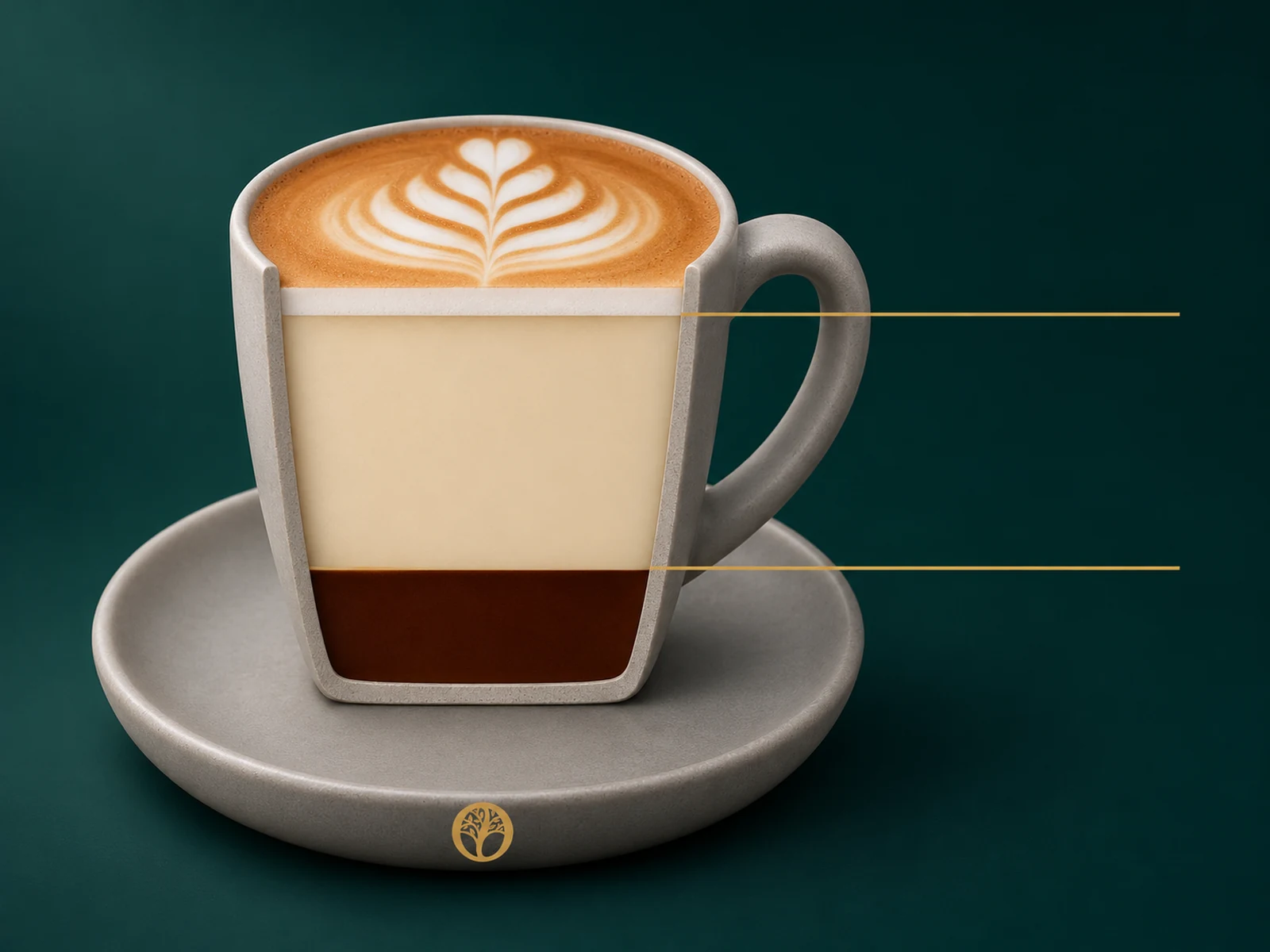
Espresso, warm milk, and the fine structure of microfoam.
A latte brings espresso into a larger volume of steamed milk, finished with a fine layer of microfoam. Roasted aromas meet milk’s gentle sweetness, while dispersed air gives the surface its satin appearance. The balance depends on the coffee, extraction, milk composition, and the amount of air introduced during steaming. This profile explores that balance through chemistry, texture, and nutrition. Its reference serving is a plain, hot 12 oz / 355 mL café latte made with dairy milk. All quantities are illustrative ranges that vary by recipe; they are not measurements of Amberdo Cafe’s Vancouver offering.
Composition
Component
Per typical serving
Notes
Espresso
30–60 mL, approximately 1–2 shots
Illustrative plain 12 oz / 355 mL latte; recipe, shot definition and crema change volumes. Espresso includes brewing water.
Milk
240–290 mL before steaming
Dairy reference; recipe-dependent. Aeration and condensed steam expand volume; liquids need not total 355 mL. Plant beverages change nutrition and foam.
Water
0 mL separately added; approximately 240–320 mL total water within the ingredients
Water in milk and espresso, plus a little condensed steam; not a separate ingredient. Varies with recipe and milk composition.
Caffeine
Approximately 60–160 mg
Illustrative one-to-two-shot range, not guaranteed. Species, dose and extraction can produce values outside it; milk dilutes concentration without removing caffeine.
Fat
Approximately 0–10 g
Primarily fat from 240–290 mL skim to whole dairy milk; varies with recipe and milk choice.
Sugars
Approximately 12–17 g
Total sugars, mainly natural dairy lactose. No added sugar or syrup; recipe-dependent.
Protein
Approximately 8–11 g
Primarily milk casein and whey proteins. Estimated from standard dairy-milk composition; varies by recipe and milk choice.
Calories
Approximately 90–190 kcal
Rounded skim-to-whole-milk estimate including espresso. Recipes and additions change calories; not laboratory results or an Amberdo nutrition declaration.
Serving measurements
Caffeine
Approximately 60–160 mg0–200 mg
Calories
Approximately 90–190 kcal0–300 kcal
Protein
Approximately 8–11 g0–15 g
Each bar uses its own labelled scale; values are not comparable across units.
Coffee chemistry
Roasting and the Maillard reaction
During roasting, reducing sugars react with amino compounds through the Maillard reaction. The resulting melanoidins contribute brown colour, while compounds including pyrazines help shape roasted aromas. Roast conditions influence which notes remain perceptible after milk is added. [3]
Chlorogenic acids and flavour
Coffee contains chlorogenic acids, a family of phenolic compounds transformed during roasting. Their breakdown products, including lactones, contribute to bitterness. Perceived acidity also reflects other organic acids, concentration, and the milk matrix; it cannot be inferred from chlorogenic-acid content alone. [4][3]
Extraction, temperature, and time
Hot water moves soluble compounds from ground coffee into espresso. Around 90–96 °C and 25–35 seconds are useful reference windows, rather than universal targets. Grind size, flow, dose, and beverage yield work together to determine concentration and flavour. Brewing temperature is distinct from the latte’s serving temperature. [8]
Milk proteins and microfoam
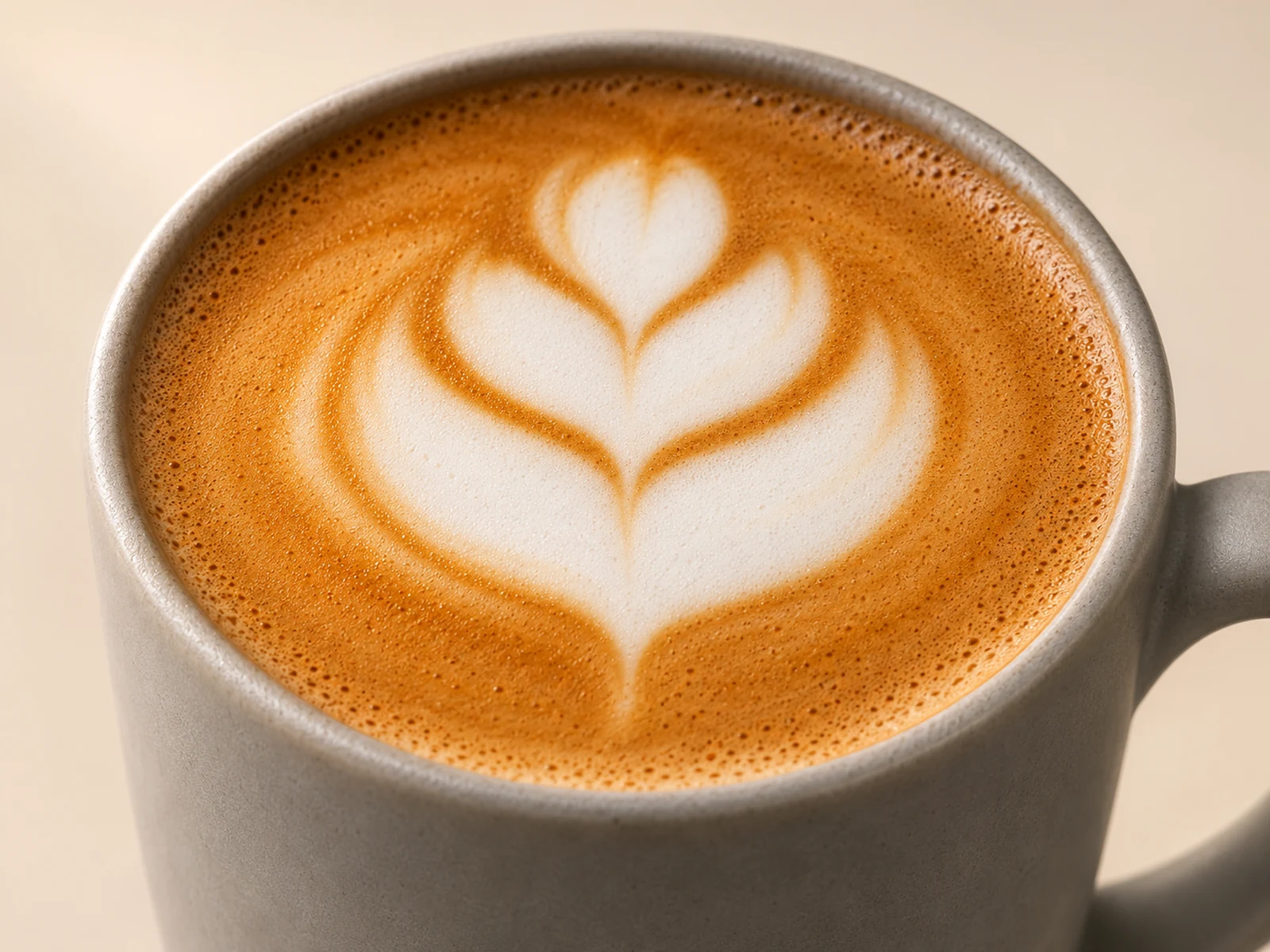
Steam introduces heat and air. Milk proteins adsorb at air–water interfaces, helping stabilise small bubbles; heating also changes whey-protein structure. Controlled aeration and circulation produce a fine, integrated foam. Milk composition, temperature, and drainage influence how long its smooth texture lasts. [5]
Sweetness without caramelisation
Plain milk contains lactose, which contributes mild sweetness. Ordinary latte steaming does not caramelise this sugar. Warmth, aroma, and the balance between milk and espresso influence perceived sweetness, while fat and dispersed bubbles shape the sensation of body. [7][5]
Wellbeing
Alertness
Studies suggest caffeine can temporarily increase alertness and reduce sleepiness. Responses vary with sensitivity, habitual intake, and timing; a latte’s gentle flavour does not indicate a low caffeine dose. [2]
Coffee polyphenols
Studies suggest chlorogenic acids and their metabolites have biological activity. Antioxidant effects measured in laboratory systems do not establish a particular benefit from one latte; absorption and metabolism vary between people. [4]
Milk’s nutritional contribution
Studies suggest dairy foods can contribute useful protein and calcium within a balanced diet. The illustrative milk quantity here supplies roughly 280–380 mg calcium alongside the protein listed above. Fortification and protein content differ among plant beverages. [6][7]
Timing and tolerance
Studies suggest caffeine can interfere with sleep, including at relatively modest doses near bedtime. Individual tolerance matters. Dairy milk also contains lactose and milk proteins, which may affect suitability for people with lactose intolerance or milk allergy. [2][6]
Health Canada recommends up to 400 mg caffeine per day from all sources for most healthy adults, with a lower maximum of 300 mg during pregnancy; EFSA uses 200 mg per day during pregnancy. These are upper limits, not intake targets. [1][2]
For general information only; not medical advice. Values vary with recipe and serving size.
Serving
For Amberdo Cafe, Vancouver: espresso with steamed milk and a thin microfoam finish is the general latte style described here. Amberdo’s exact temperature, vessel, and ratio have not been supplied; the following are illustrative café conventions rather than confirmed house specifications.
Milk is commonly steamed to around 55–65 °C; the finished drink’s temperature depends on the espresso, cup, and time before serving.
A nominal 12 oz / 355 mL café cup is the reference vessel for this profile; actual cup size and material require confirmation from Amberdo.
Approximately 1 part prepared espresso to 4–8 parts milk by liquid volume before aeration is a useful broad reference. A representative combination is 45 mL espresso with 270 mL milk, or 1:6, with foam contributing to the final volume. This is not the ground-coffee-to-water brewing ratio.
A closer look
Latte in three-quarter view, with a satin microfoam finish.Front view of the cup and the latte’s pale coffee tone.From above: milk patterns across the coffee surface.Illustrated section: fine foam above blended espresso and milk.A closer look at the fine bubbles of microfoam.
Quality brew, great service and lovely pastries! What more to ask for on a rainy day 😌
★★★★★
Wow what a gem. Had ham and cheese croissant that was absolutely delicious! Almond croissant was very fresh and tasty! They do have professional coffee machine but i had tea. Ambiance and service are great too! And the prices are very fair to say the least. I’m surprised there isn’t a line out the door here! Absolutely recommend this place!
★★★★★
Best croissant outside of Europe
★★★★★
A lovely, quiet café with a cozy and relaxing atmosphere. The food is delicious, especially the cinnamon roll and sandwich. The coffee is very smooth.
★★★★★
Beautiful café run by an incredibly friendly family! Had an oat milk latte, and it was excellent. Highly recommend!
★★★★★
Thank you for the wonderful café you’ve created; your coffee and pastries are exceptional.
★★★★★
Best cafe in the area Very lovely place and good quality
★★★★★
Super good perfect balance of matcha milk coffee and sweetness please don’t ever change hahah