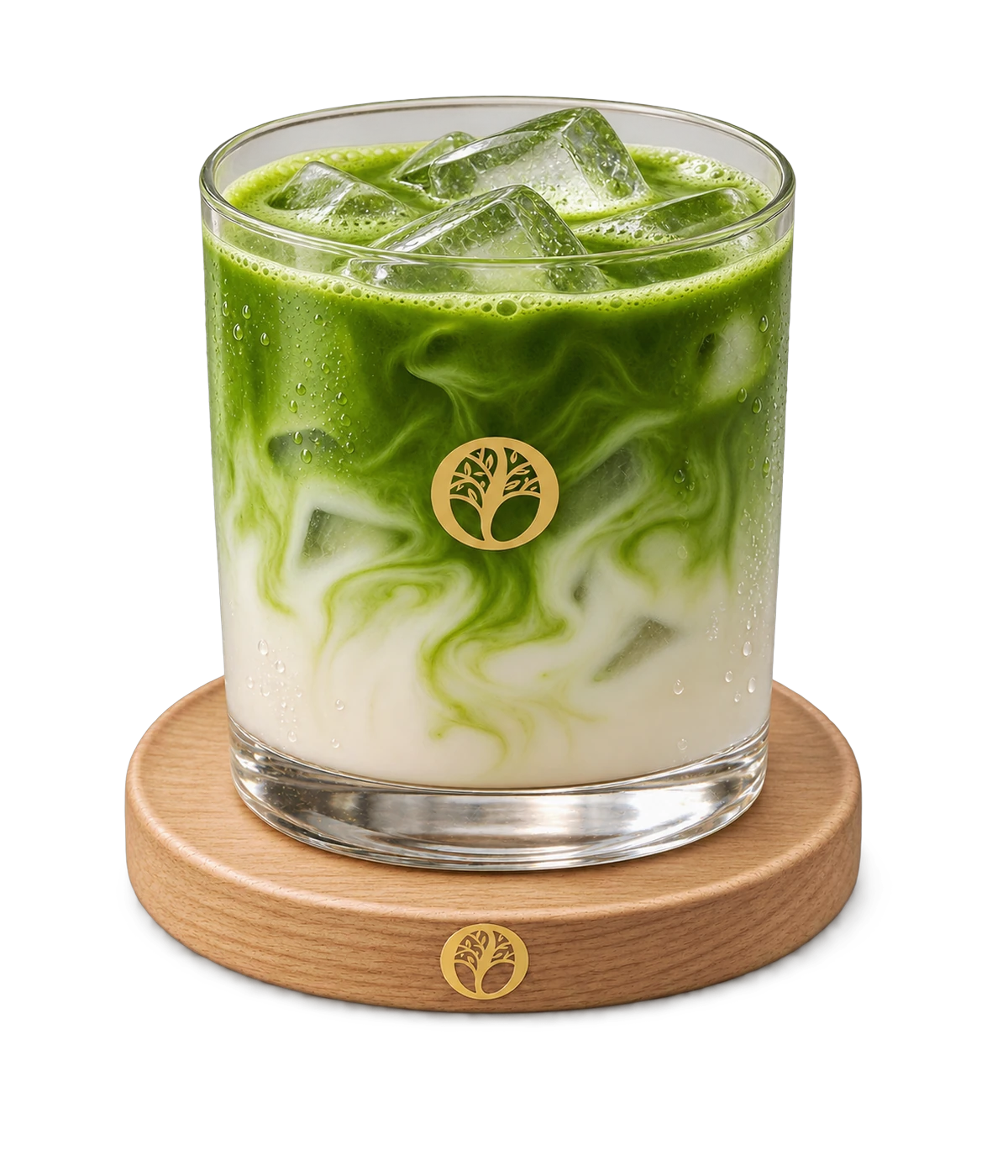
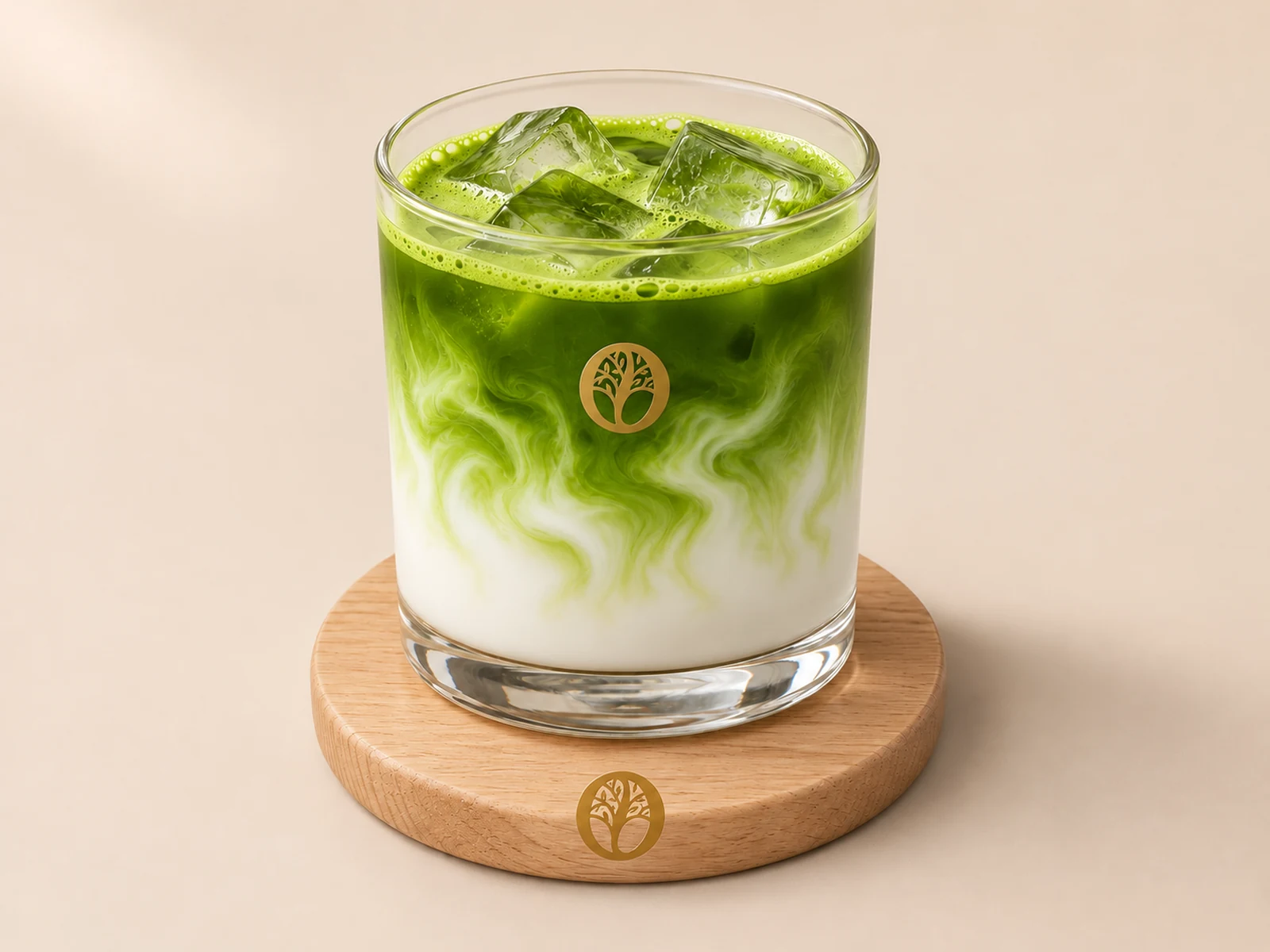
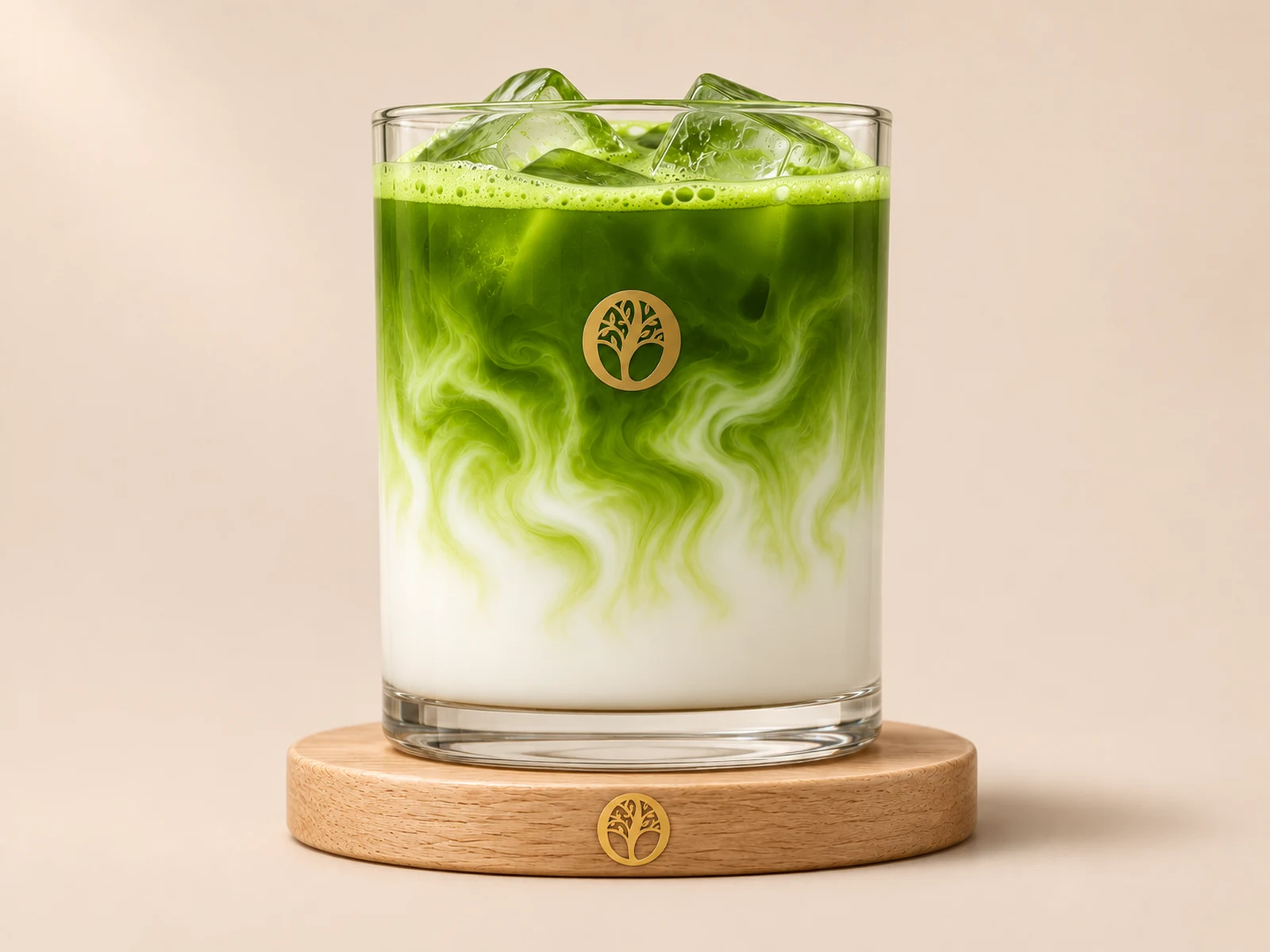
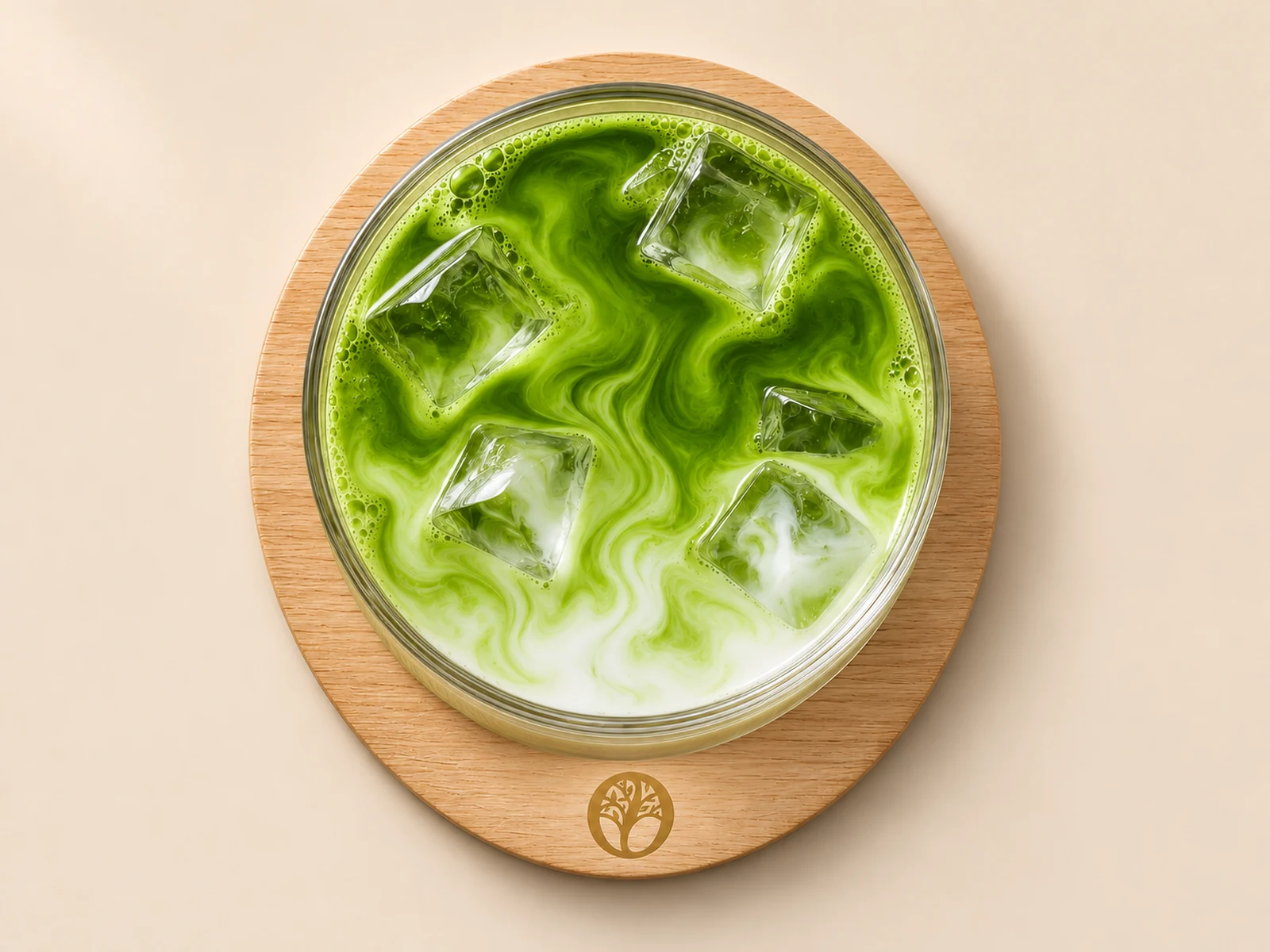
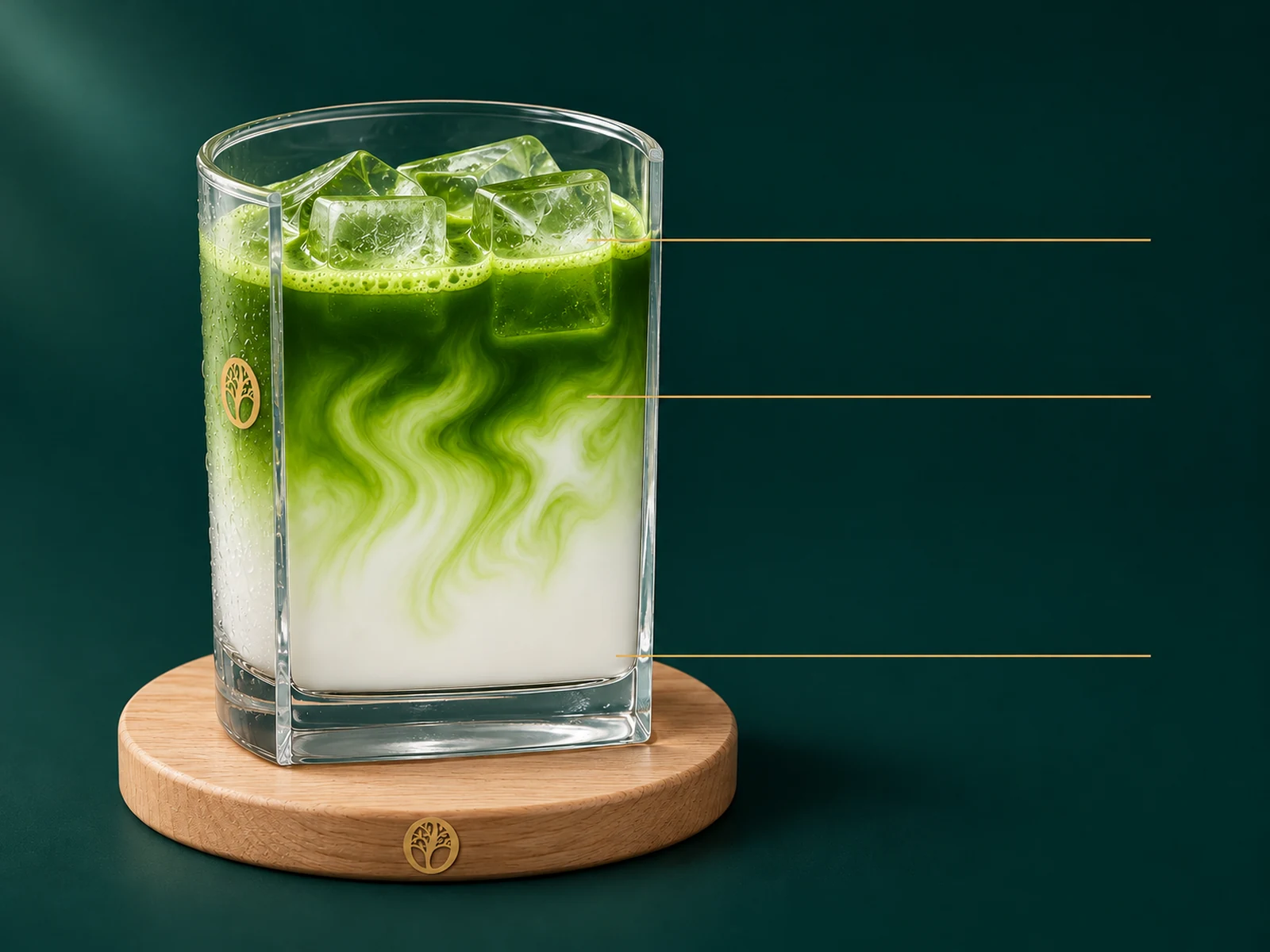
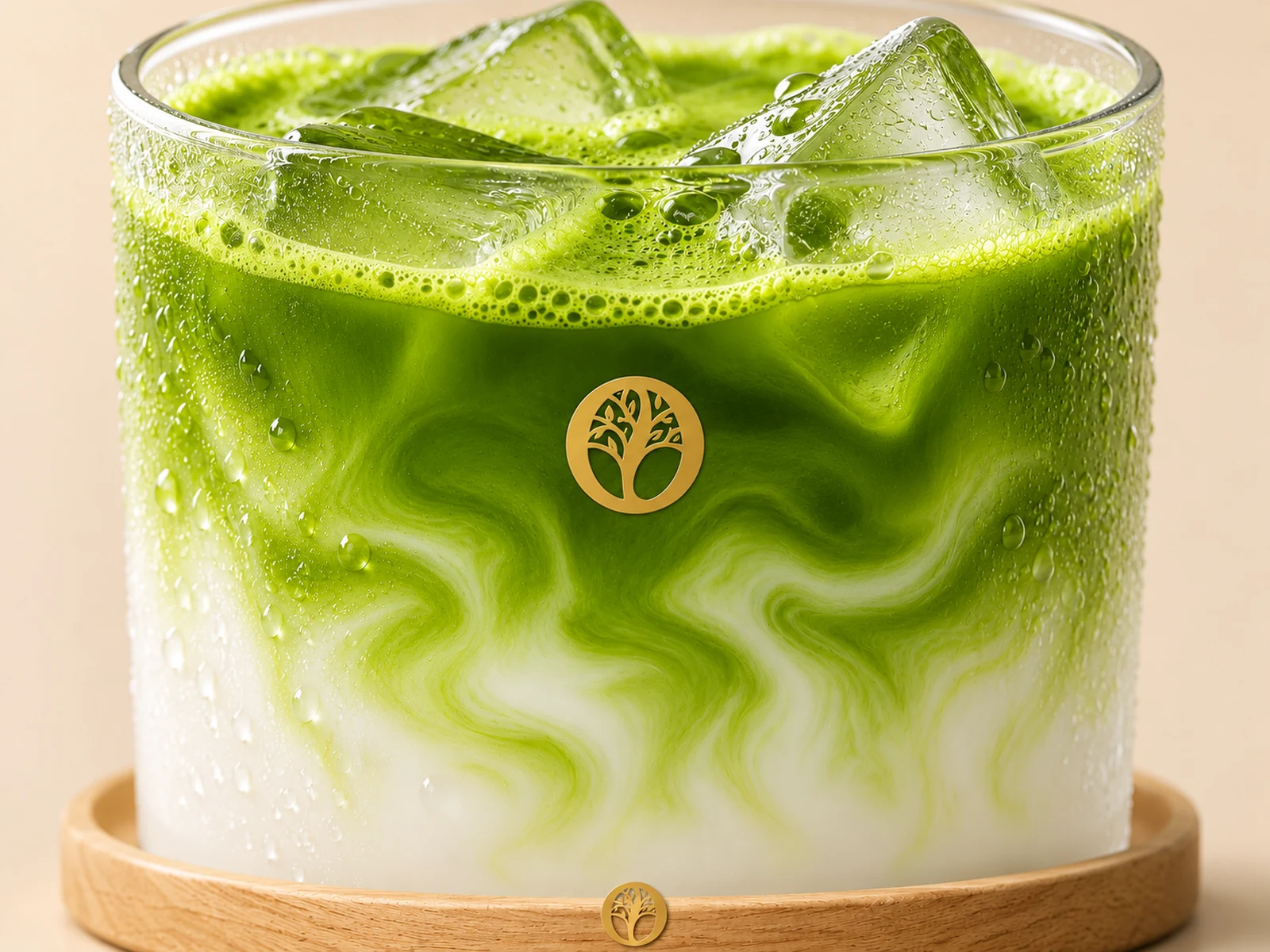
Jade-green matcha, white milk and clear ice, joined by a delicate gradient.
Bright jade-green matcha rests above white milk, with clear ice cubes catching the light and a visible green-to-white gradient between the layers. Gentle stirring brings grassy, umami notes into milk’s soft sweetness; melting ice gradually lightens the drink. Matcha is finely ground tea leaf dispersed in water, so the leaf powder is consumed rather than strained away. This profile for Amberdo Cafe in Vancouver explores its chemistry and nutrition. Values describe an illustrative unsweetened 12 oz / 355 mL serving including ice, using plain dairy milk and 2–3 g matcha. They depend on the recipe and ingredients; they are neither laboratory results nor Amberdo nutrition declarations.
Composition
Component
Per typical serving
Notes
Matcha powder
2–3 g
Illustrative plain whole-leaf powder dose for a 12 oz / 355 mL serving including ice; not a sweetened premix or an Amberdo specification.
Milk
180–220 mL
Plain skim-to-whole dairy milk baseline; recipe-dependent. Plant beverages and sweetened milk change nutrition. Excludes milk with added milk solids.
Water
30–50 mL for whisking, plus 80–100 g clear ice
Excludes water in milk. Ice adds water as it melts; adjust quantities together to fit the cup rather than combining all maxima.
Caffeine
Approximately 38–133 mg
Calculated from 2–3 g powder and published 18.9–44.4 mg/g caffeine (kochman-2021; kolackova-2020). Product variation may exceed this estimate; milk and ice do not remove caffeine.
Fat
Approximately 0–8 g
Rounded estimate for skim-to-whole milk and a small powder contribution (hc-milk-2008; mext-2023); depends on recipe.
Sugars
Approximately 9–13 g
Mainly milk lactose, rounded from the dairy reference (hc-milk-2008). No syrup or added sugar; sweetened powders and alternatives change the estimate.
Protein
Approximately 6–9 g
Rounded calculation for 180–220 mL milk plus 2–3 g matcha (hc-milk-2008; mext-2023); plant beverages differ.
Calories
Approximately 70–145 kcal
Rounded milk-plus-powder estimate (hc-milk-2008; mext-2023), without syrup or cream. Recipe-dependent; not laboratory analysis or an Amberdo nutrition declaration.
Serving measurements
Caffeine
Approximately 38–133 mg0–200 mg
Calories
Approximately 70–145 kcal0–300 kcal
Protein
Approximately 6–9 g0–15 g
Each bar uses its own labelled scale; values are not comparable across units.
Coffee chemistry
Chlorophyll and the jade-green layer
Chlorophyll pigments give matcha its green colour. Shade cultivation influences pigment and amino-acid composition, while cultivar, processing and storage also matter. Pouring the green suspension gently over white milk and clear ice creates a visible gradient; this transient arrangement gradually blends and is not evidence of nutritional quality. [3][4]
Whole-leaf suspension and caffeine
Whisking disperses fine leaf particles while soluble compounds move into the water. Unlike strained tea, matcha retains the powder in the drink; dose and leaf composition therefore matter when estimating caffeine. Ice dilution lowers concentration without lowering the total caffeine in a fully consumed serving. Particles may settle, so gentle stirring helps redistribute them. [4][3]
EGCG, bitterness and astringency
Matcha contains catechins, including epigallocatechin gallate (EGCG). These polyphenols contribute to bitterness and astringency, alongside other compounds. Published analyses show differences between products and analytical preparations; a powder’s laboratory antioxidant activity cannot establish the effect of a finished latte in the body. [5][4]
L-theanine and umami
L-theanine is a tea amino acid associated with matcha’s savoury character. Its balance with other amino acids, catechins and caffeine influences flavour. The amount varies with cultivation and product, so this profile assigns no fixed L-theanine dose and does not promise a calming effect from one glass. [3][6]
Milk texture, ice and mixing
Milk supplies dispersed fat and proteins that contribute body; its proteins can also help stabilise bubbles if aerated. This iced preparation uses cold milk, with no required microfoam. Melting ice absorbs heat and adds water, softening flavour concentration as the jade-green and white layers merge. This describes the proposed serving behaviour, not a measured stability test. [8]
Wellbeing
Attention and individual response
A controlled trial of 150 mg caffeine with 250 mg L-theanine found improvements in some attention measures. A separate trial in 23 people used 4 g matcha and found limited attention and memory effects, with no significant mood change. These study doses differ from this latte’s 2–3 g powder reference and do not establish better focus or fewer jitters from this drink. [6][7]
Tea polyphenols
Matcha supplies catechins such as EGCG. Laboratory assays demonstrate antioxidant activity, but they do not establish disease prevention or a particular health benefit from one iced latte. The amount consumed, digestion and the overall diet all matter; no fixed EGCG dose is assigned here. [5][4]
Milk nutrients
Dairy milk contributes protein and calcium within the overall diet. The estimated 6–9 g protein includes a small contribution from matcha powder. Studies suggest dairy can support nutrient adequacy, while plant beverages vary in protein and fortification; choosing another milk changes the recipe’s nutritional profile. [9][10][11]
Sleep and sensitivity
Caffeine may disturb sleep, particularly close to bedtime, and personal sensitivity varies. L-theanine does not make the drink caffeine-free or guarantee restful sleep. Milk contains lactose and milk proteins, which matter for people with lactose intolerance or milk allergy. These are general considerations, not medical advice. [2][9]
Health Canada recommends a maximum of 400 mg caffeine per day from all sources for most healthy adults, and 300 mg for people who are pregnant, planning pregnancy or breastfeeding. Individual tolerance may be lower; these maxima are not intake targets. This profile provides general food information, not medical advice. [1]
For general information only; not medical advice. Values vary with recipe and serving size.
Serving
Serving reference for Amberdo Cafe’s profile: whisk matcha with water, then pour gently over cold white milk and clear ice to show the jade-green upper layer and green-to-white gradient. Stir before drinking. These are illustrative preparation details; Amberdo’s exact recipe has not been supplied.
Serve chilled over ice. The final temperature depends on the whisking water, milk, ice load and time before drinking; no measured house temperature is claimed.
A clear 12 oz / 355 mL cold-drink glass or cup makes the gradient visible, with ice occupying part of the capacity; this is an illustrative vessel.
Approximately 1 part prepared matcha suspension to 4–7 parts milk by liquid volume before ice dilution. An example is 2 g powder whisked with 40 mL water, added to 200 mL milk over 90 g ice; adjust together to fit the cup.
A closer look
Three-quarter view: bright jade-green matcha over white milk, with clear ice and a visible gradient.Front view: a distinct jade-green-to-white gradient behind clear ice cubes.From above: clear ice cubes across the jade-green matcha surface.Illustrated cutaway: green matcha above white milk, with a soft gradient and clear ice.Close-up: jade-green wisps meeting white milk around the edges of clear ice.
Quality brew, great service and lovely pastries! What more to ask for on a rainy day 😌
★★★★★
Wow what a gem. Had ham and cheese croissant that was absolutely delicious! Almond croissant was very fresh and tasty! They do have professional coffee machine but i had tea. Ambiance and service are great too! And the prices are very fair to say the least. I’m surprised there isn’t a line out the door here! Absolutely recommend this place!
★★★★★
Best croissant outside of Europe
★★★★★
A lovely, quiet café with a cozy and relaxing atmosphere. The food is delicious, especially the cinnamon roll and sandwich. The coffee is very smooth.
★★★★★
Beautiful café run by an incredibly friendly family! Had an oat milk latte, and it was excellent. Highly recommend!
★★★★★
Thank you for the wonderful café you’ve created; your coffee and pastries are exceptional.
★★★★★
Best cafe in the area Very lovely place and good quality
★★★★★
Super good perfect balance of matcha milk coffee and sweetness please don’t ever change hahah