Lamination and steam
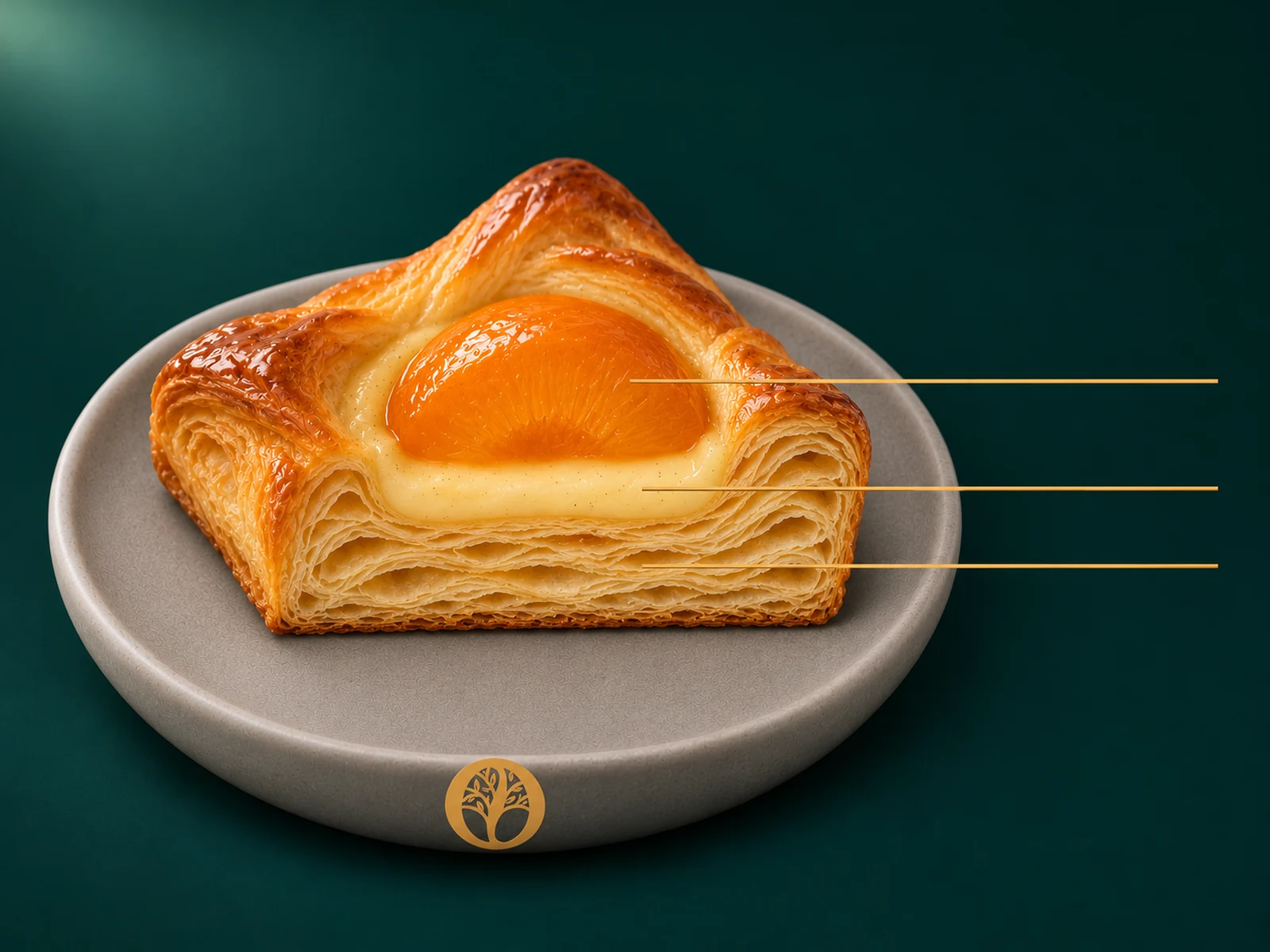
Rolling and folding alternate thin layers of dough and butter. In the oven, water becomes steam and separates the sheets. The dough sets around these spaces, creating a flaky structure. [1]



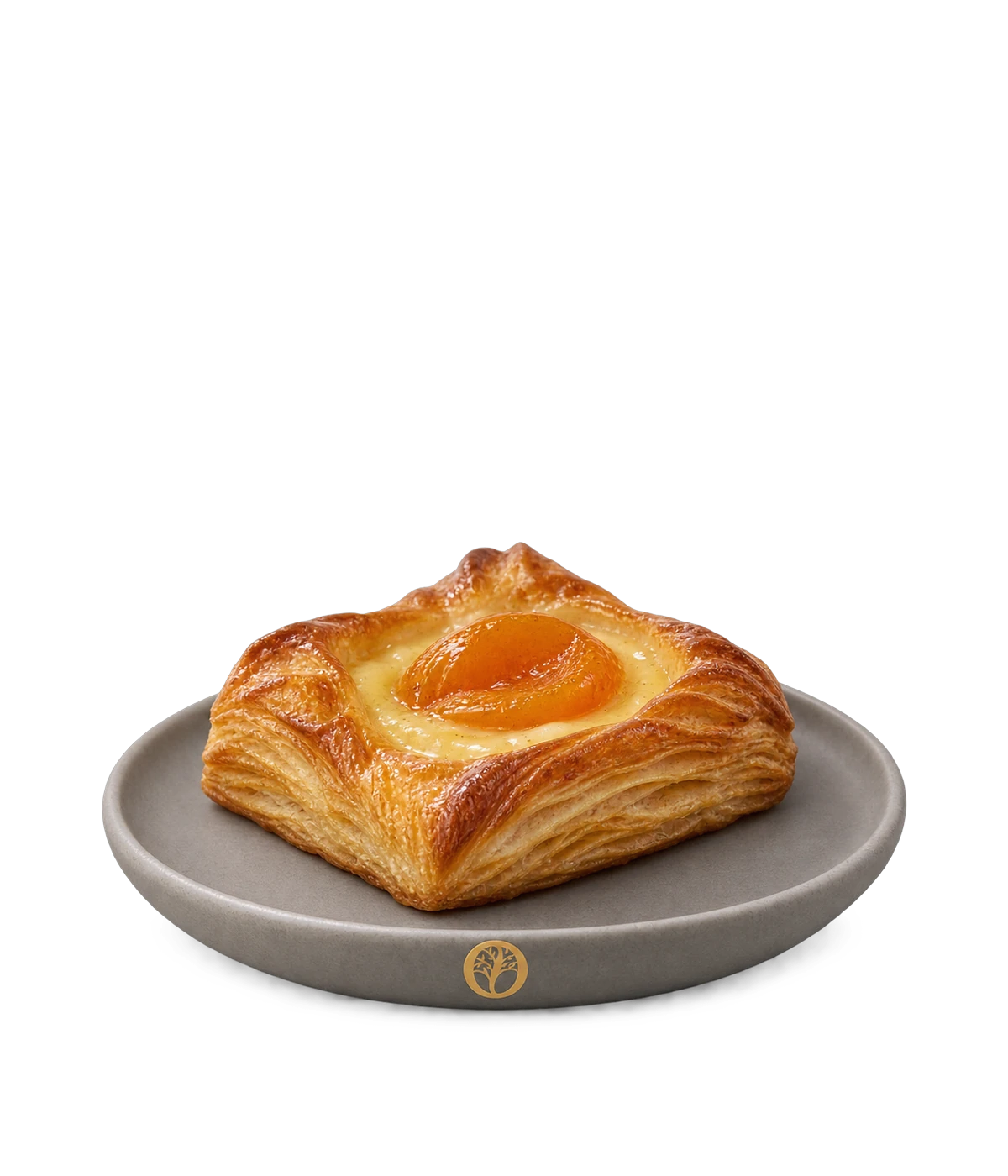
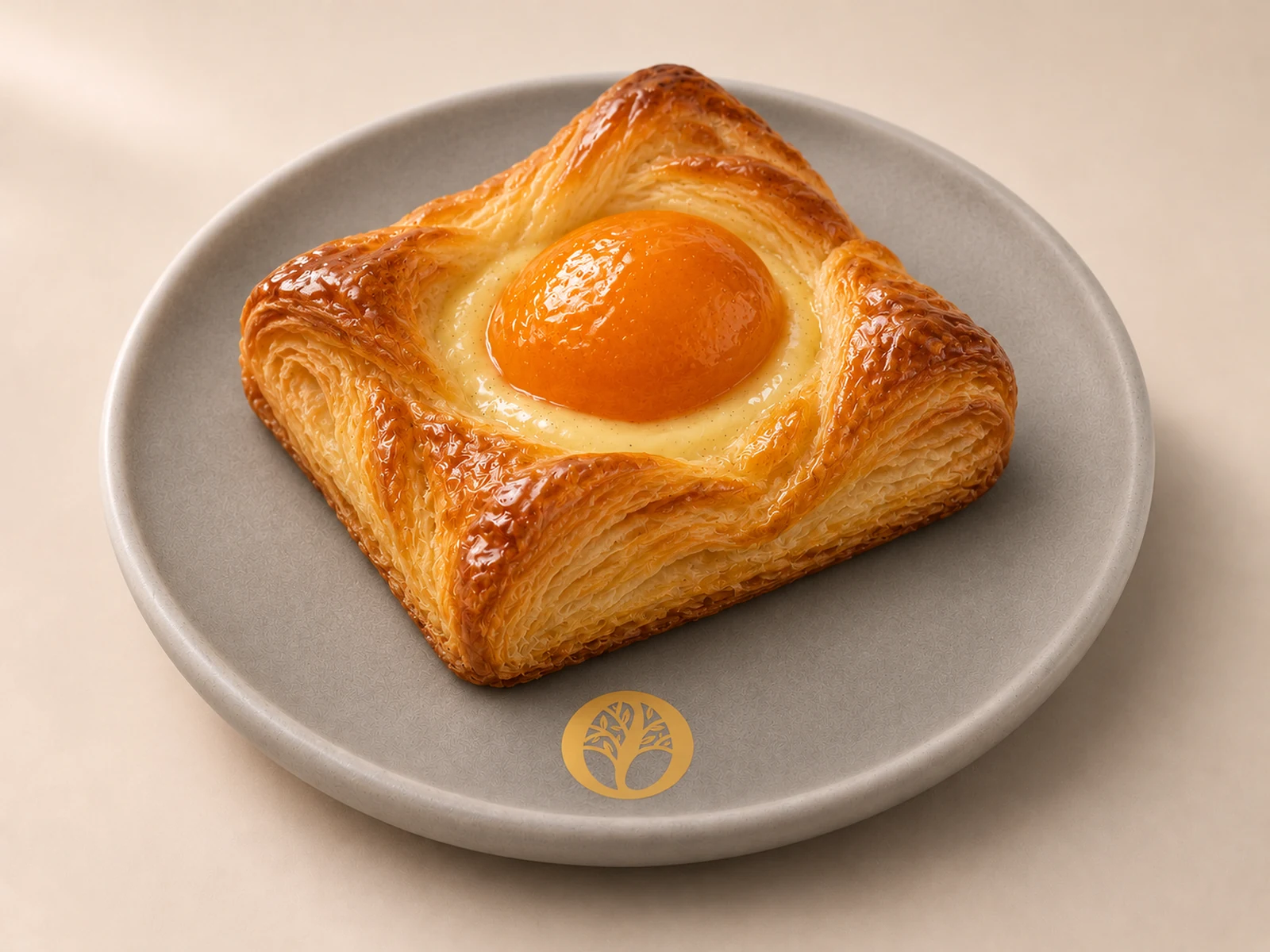
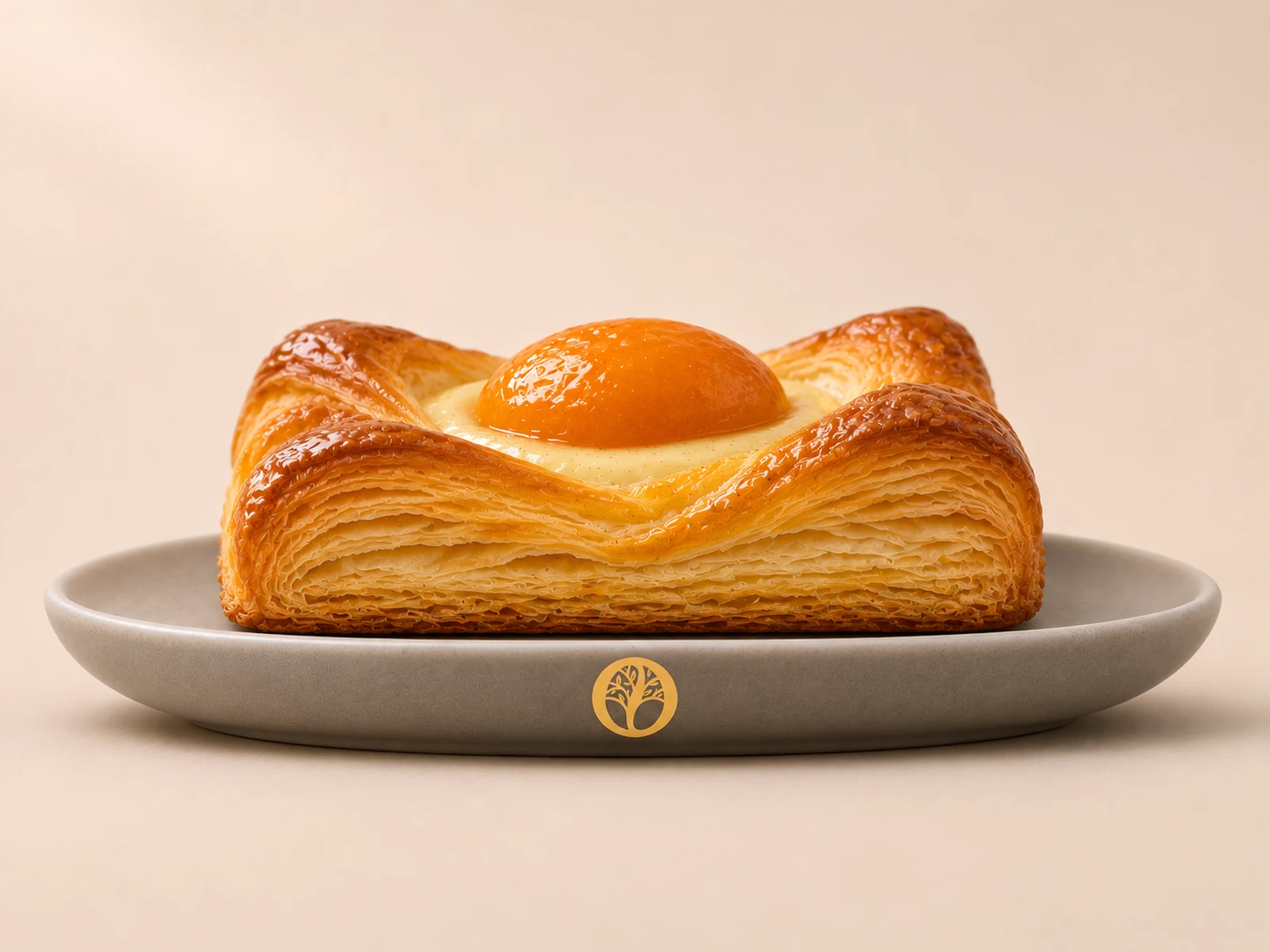
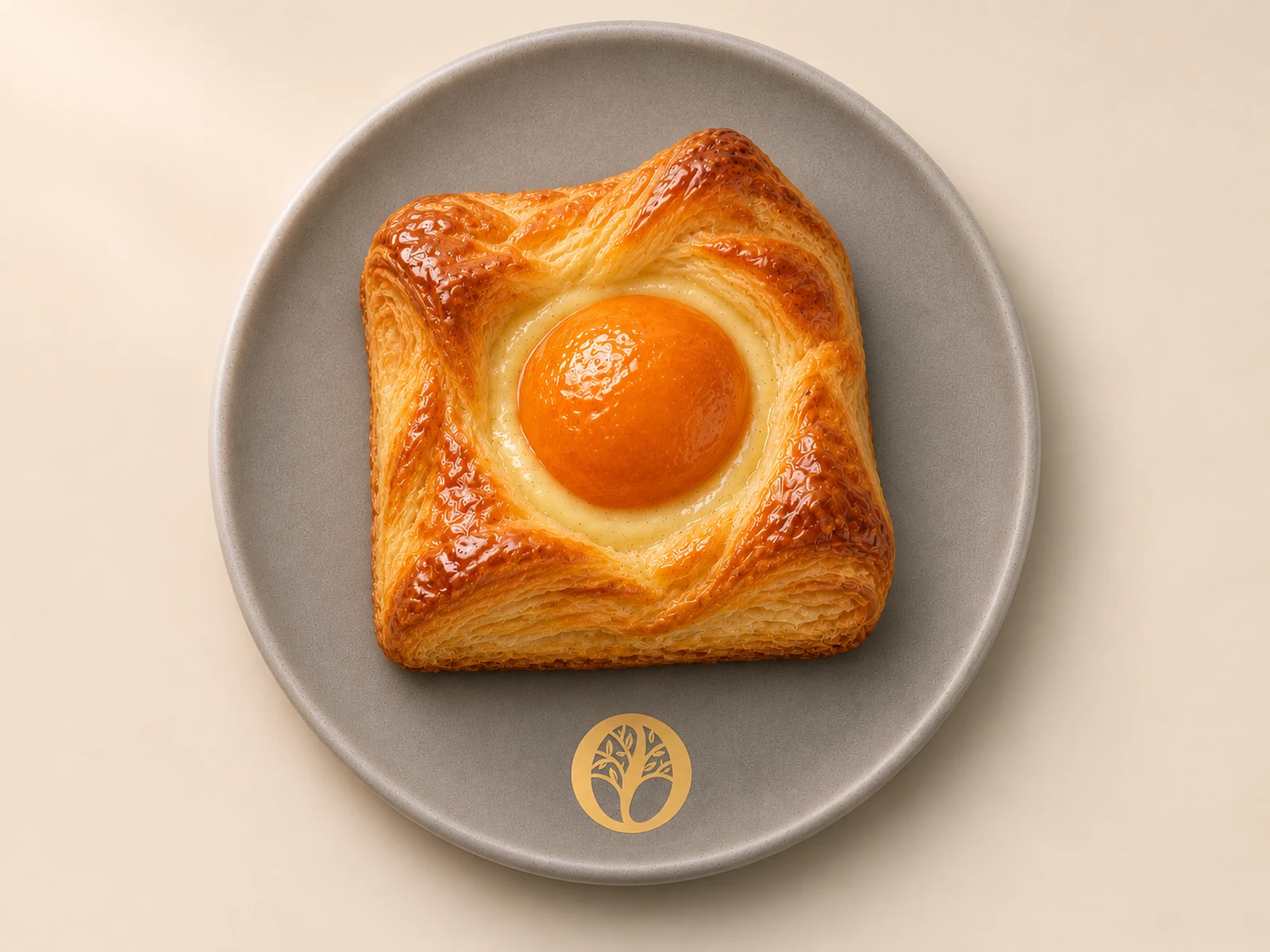
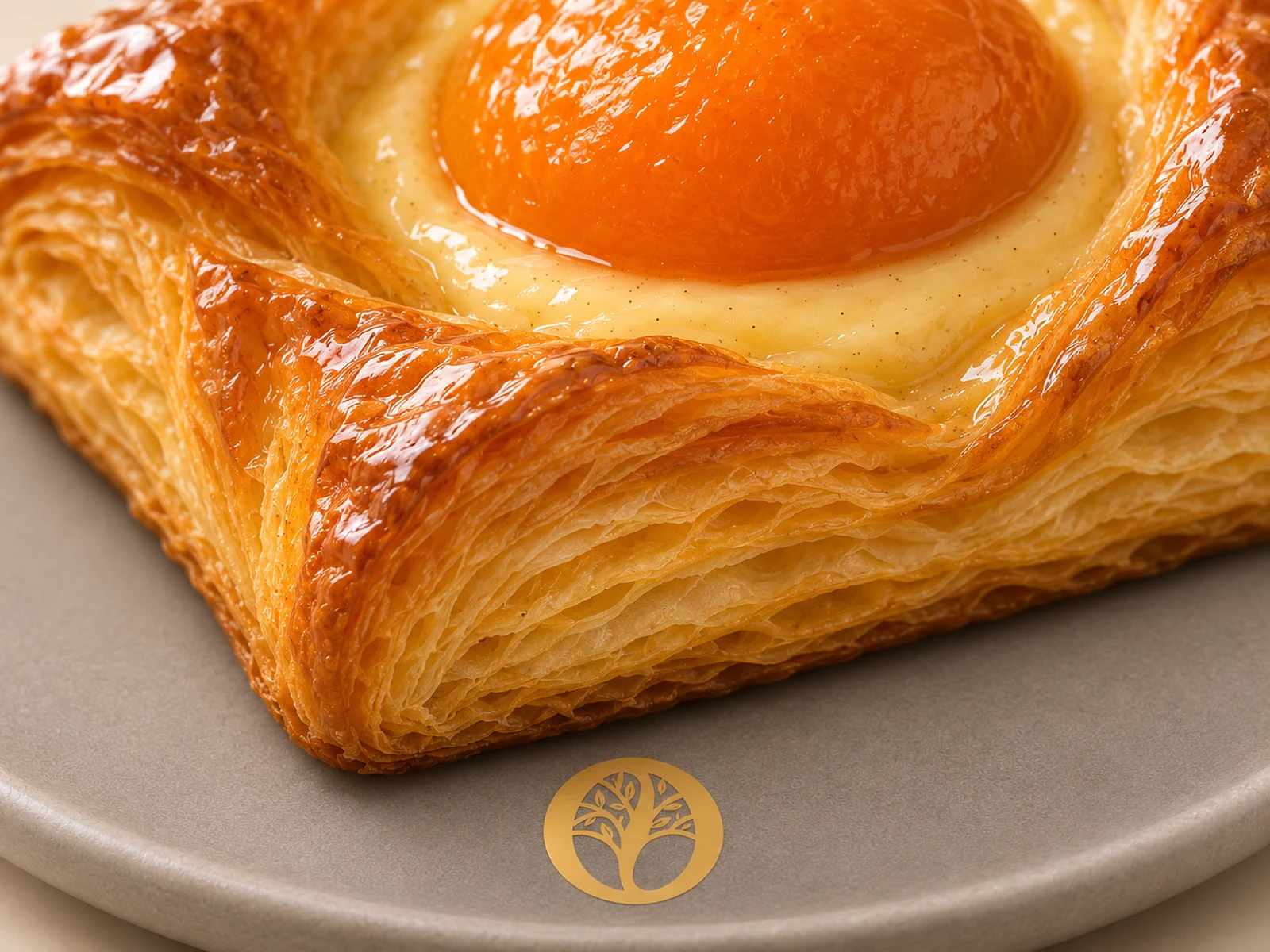
Golden folded layers, vanilla custard and a glossy apricot centre.
Golden pastry corners fold around vanilla custard and a glossy apricot half. Crisp outer layers contrast with the soft filling and gently tart fruit. Butter separates the dough into thin sheets that lift as steam expands during baking. The nutrition estimates below use generic fruit-Danish data; Amberdo’s recipe and portion size may differ.
| Component | Per typical serving | Notes |
|---|---|---|
| Portion weight | 60–90 g per piece | Reference portion for the estimates below; actual size varies. |
| Carbohydrate | Approximately 29–43 g | Includes starch and sugars. Flour, filling and glaze affect the amount. |
| Total fat | Approximately 11–17 g | Includes fat from pastry and filling; this is not the weight of butter. |
| Total sugars | Approximately 17–26 g | Includes naturally occurring and added sugars from fruit, custard and glaze. |
| Protein | Approximately 3–5 g | Wheat, milk and egg contribute protein. |
| Sodium | Approximately 210–320 mg | Salt and ingredient choices affect the amount. |
| Energy | Approximately 220–335 kcal | Scaled from generic fruit Danish data; individual recipes may fall outside this range. |
| Allergens | Wheat/gluten, milk and egg expected | Ask staff about ingredients and cross-contact, including nuts and sesame. |
Each bar uses its own labelled scale; values are not comparable across units.
Rolling and folding alternate thin layers of dough and butter. In the oven, water becomes steam and separates the sheets. The dough sets around these spaces, creating a flaky structure. [1]
Butter must bend with the dough during rolling. Too cold, it can fracture. Too warm, it can smear into the dough. Keeping the layers distinct helps the pastry rise evenly. [1]
As the surface dries and heats, reducing sugars react with amino compounds through the Maillard reaction. This develops brown colour and toasted aromas. Moisture, temperature and baking time shape the result. [2]
In starch-thickened custard, heat and water swell starch granules and release some of their polymers. This process, called gelatinisation, thickens the filling. The smooth custard contrasts with the crisp pastry. [3]
A reference piece of 60–90 g supplies approximately 220–335 kcal. Portion size and the proportions of pastry, custard and fruit change the energy content. [4]
Total sugars include both natural and added sugars. Total fat includes saturated fat. Sodium varies with the salt and other ingredients used. [4]
This style typically contains wheat/gluten, milk and egg. Ask staff about the current ingredients and possible cross-contact with nuts, sesame or other allergens. [5]
Choose a portion to suit your appetite. The apricot topping contributes flavour and sweetness; the pastry remains an energy-dense food. [4]
For general information only; not medical advice. Values vary with recipe and serving size.
Pair with an iced latte. Coffee’s roasted notes complement the golden crust, while milk echoes the softness of vanilla custard.
Enjoy fresh, once the fruit and custard are comfortable to eat. Follow staff guidance for storing any custard-filled pastry.
Serve on a small plate with a fork for the soft centre.
Alternate bites and sips to find your preferred balance of pastry sweetness and coffee bitterness.
★★★★★
Quality brew, great service and lovely pastries! What more to ask for on a rainy day 😌
★★★★★
Wow what a gem. Had ham and cheese croissant that was absolutely delicious! Almond croissant was very fresh and tasty! They do have professional coffee machine but i had tea. Ambiance and service are great too! And the prices are very fair to say the least. I’m surprised there isn’t a line out the door here! Absolutely recommend this place!
★★★★★
Best croissant outside of Europe
★★★★★
A lovely, quiet café with a cozy and relaxing atmosphere. The food is delicious, especially the cinnamon roll and sandwich. The coffee is very smooth.
★★★★★
Beautiful café run by an incredibly friendly family! Had an oat milk latte, and it was excellent. Highly recommend!
★★★★★
Thank you for the wonderful café you’ve created; your coffee and pastries are exceptional.
★★★★★
Best cafe in the area Very lovely place and good quality
★★★★★
Super good perfect balance of matcha milk coffee and sweetness please don’t ever change hahah
★★★★★
A bit expensive but good!